Just a Sinner, Saved by Grace

In the Religious Soup of my past, no human being had inherent worth. At the best, as I was taught, we were all worms. “Just a sinner saved by grace,” we learned.

If only we had not been taught to containerize scripture. Then, we might have remembered to apply the notion that we are what we believe (Proverbs 23:7).

This destructive way of thinking has its roots in a worldly ideology. It comes from the belief is that we, as humans, are not valued as individuals but for our performance.

So let’s cut through the fluff and get to the essence of what our pastors and teachers have conveyed to us: our worth is determined solely by what we can offer to God.

Unfortunately, this mode of thinking also causes and instructs us to measure ourselves by the performance of others. Which, in turn, puts us in cognitive dissonance:

“… Not that we dare to classify or compare ourselves with some of those who are commending themselves. But when they measure themselves by one another and compare themselves with one another, they are without understanding.” (2 Corinthians 10:12)

Are you beginning to see the error? Jesus called it out succinctly:

“But in vain they do worship me, teaching for doctrines the commandments of men.”

Challenging the 3rd Commandment and its Implications

While I agree with this sentiment in principle, it is worth noting that the commandment is not about how we use His name but how we take His name.

That commandment does not infer that speaking His name inappropriately is the primary or immediate concern. The sentiment above speaks more to religiosity.

It falls into the category of KJV-Onlyism: READ the right thing, BELIEVE the right thing, DO the right thing, BE acceptable to God.

Notwithstanding, the commandment directly addresses how His name must be personally appropriated, emphasizing its personal applications in relationship to Him alone.

Taking Names in Vain

Anyone can take the name Governor in vain because we all know there’s only one state governor.

Any business can give themselves the name IBM, but we all know that International Business Machines will eventually shut them down.

The Razorback football team can call themselves “Big Al,” but that does not change who they are, how they play football or the likelihood of them winning the SEC.

All of those examples demonstrate a name taken in vain. But let’s look at one more.

What it really means to Take His name in Vain

A person can get married and take their spouse’s name. In the previous century, it was not uncommon for the wife to be called by her husband’s name. I remember my mother being referred to as Mrs. Hugh Means, and certainly, Mrs. Means. So, let’s follow that thread to understand exactly what the commandment means.

If a woman marries a wealthy man, but then refuses to accept his care, or spend his money to care for herself and their children, she has taken his name in vain.

Taking God’s name in vain is similar but carries far greater consequences. To take His name in vain is to put yourself into His family (as a “child of God”) but refuse your role in His Kingdom.

“Who does that,” we might ask? We not only do that, but we teach that as doctrine. The people in the church who do that are known as Cessationists, those who fully reject these words of Jesus as being God’s Logos for us today:

“Truly, truly, I say to you, he who believes in Me, the works that I do, he will do also; and greater works than these he will do; because I go to the Father. ”

John 14:12

“And these signs will accompany those who believe: In my name they will drive out demons; they will speak in new tongues; they will pick up snakes with their hands; and when they drink deadly poison, it will not hurt them at all; they will place their hands on sick people, and they will get well.”

Mark 16:17-18:

Do you still Believe in God?

Do you still believe in God?

I once believed in my spouse:

– I believed she was kind and respectful.
– I believed she honored and loved me.
– I believed she would do anything for me.

But now, I no longer believe in my spouse.

Today, I know her. I’ve moved beyond belief and into an experiential relationship. I know our relationship is one of kindness, honor, love, respect, and self-sacrifice toward one another. We have a root of relationship that transcends belief. I know my wife.

How many of us still believe in our spouse in the same way when we first met?

If that seems at least somewhat preposterous, then that’s how I feel when I see some people say, “I believe in God.”

There’s a time and a place for that position. But not after you’ve been walking with Him for many years.

If you’ve subjugated yourself to the authority of a pastor who suggests you must maintain your belief or your belief and faith are one and the same, then it’s time to move on to solid food.

It’s time to explore what a relationship with your savior actually looks like.

Hatred and Love

Hate is not an emotional response of disgust or simply disliking or loathing. It is the opposite of love, where love is defined as building something up and creating value in something or someone else. God so loved that He gave Life. And in giving Life, He destroyed (hated) the effects of sin.

Hate, then, is the action of destruction. While destruction often carries the notion of dislike and disapproval, the authentic action of hatred destroys that to which it is leveraged.

A Legalistic Retrospective

In the opinion of the Religious, in what ways am I judged and responsible for my sins?

To My Wife:  

Thank you for standing by me through the years, and through these struggles.

Thank you for encouraging me.

Thank you for lifting me up in prayer to our Heavenly Father.

What I most resent about my Baptist upbringing is the rigid legalism ingrained in me, serving as a constant yardstick against which I measured my worth.

Throughout my life, I operated under the belief that an angry —or, at the very least, discontented—God was judging me for not meeting His divine standards. The teachings of Sam Cathy resonated in my soul strongly:

  • If you skip church, God will not forgive you.
  • When you willfully sin, there is no sacrifice.
  • After we’re born again, God does not separate our sins from us as far as the East is from the West.
Sam Cathy, paraphrased – about mid-way through; 20-30 minutes

I dreaded facing the Judgment Seat of Christ, knowing that God would list all my moral and spiritual failings, showcasing them as the wood, hay, and stubble that evidenced my inherent unworthiness. Surely the gold, silver, and precious stones could only be reserved for those who did God’s work, those in the ministry – and perhaps a few special others.

I always assumed that my few accomplishments would ultimately be negated; after all, how could someone as inherently flawed as myself ever please God?

Yet, it was nothing short of infuriating and gut-wrenching when I realized that my so-called ‘sins’ were not simply the result of Adam’s original failing or my deliberate straying from the path. No, they were the ghastly outcomes of unresolved emotional and physical trauma that had silently guided my life, unbeknownst to me. The absolute atrocity of the unjust judgment and constant condemnation for elements of my life that were never in my control filled me with silent rage.

In other words, and in the opinion of the Sam Cathys of this world, in what ways am I judged and responsible for my sins, which were unwittingly guided, influenced, and directly seeded by the sins of others who, with malice and forethought, intentionally harmed me? For us, that’s a dark valley journey where only the fearless may walk and ponder1.

So here I am, the Recovering-Legalist, still recovering. I’m not as naive to believe that a world given to sin does not influence our decisions nor the spiritual death of our souls. But neither am I so naive as to think that my worldview, and consequently my broken belief systems that informed my actions, were purely my doing.

For I now understand that I had help. The people who assaulted me helped. The people who molested me helped. The Baptists who taught me legalism and condemnation helped. The Sam Cathys of religion, who taught me to earn the graciousness of God beyond the cross, helped.

I had help to get to where I found myself.

But today, I have found myself in the presence of the unwavering graciousness and mercy of God, who lifted me out of the pit of mirey clay.

Who, by the way, also raised someone else who found themselves in a very similar pit. A person to whom I will be eternally thankful. A person who helped me find, express, and heal the pain lingering in my soul.

You know who you are. Thank you.


  1. Hebrews 4:12 (AMP) For the word of God is living and active and full of power [making it operative, energizing, and effective]. It is sharper than any two-edged sword, penetrating as far as the division of the soul and spirit [the completeness of a person], and of both joints and marrow [the deepest parts of our nature], exposing and judging the very thoughts and intentions of the heart. ↩︎

Trauma Healing

Trauma happens. But when it occurs in our formative years, 0-6, or 6-10, it can be especially damaging to our soul. In many cases, we will not remember the trauma until many years later. When the memories do return, we’re thrust into a period of self-reflection and self-discovery of a new person. But one of the most fearful things of all is learning new coping mechanisms that do not involve the ways we learned during the trauma, the way we approached the world for the entirety of our life.

When our brain blocks the memory of a traumatic event, we are spared the damage of something we’re not cognitively able to process. But that doesn’t mean we don’t remember: the memory is simply, for a while, hidden1.

Not only that, but as those events lurk under the surface of our consciousness, they play a significant role in building our worldviews and coping mechanisms. While those mechanisms do not accurately reflect reality, they help keep us safe from a certain point of view.

Healing

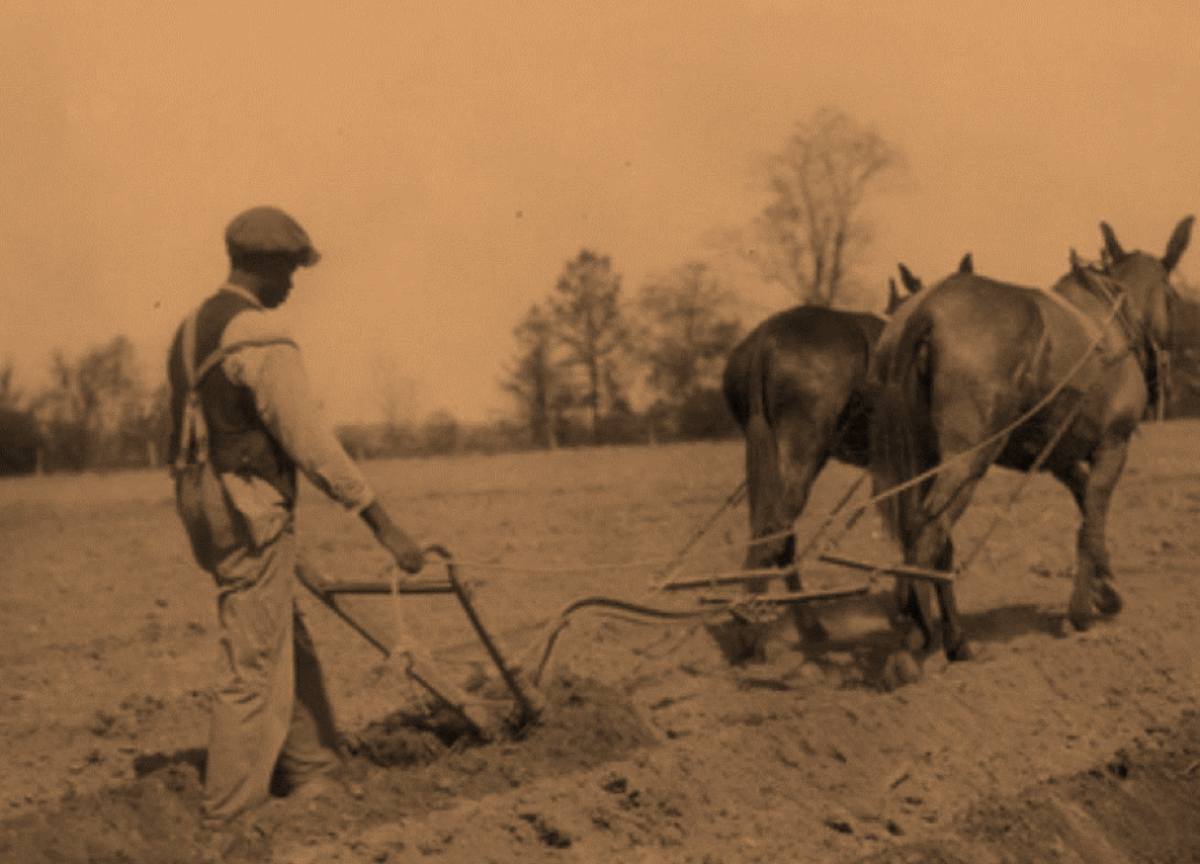
Trauma healing can be compared to the parable of plowing a field – but with a small exception: we MUST look backward for a time2. We must acknowledge that what happened was a sin against us and allow the pain to escape and move forward in time and space. When we bring it forward, we step into and through the manure of the bulls, pulling our plow and moving us forward in life under our guidance.

Similarly, we must recognize that the now unhidden pain is a personal sin against our soul, an insult against ourselves towards our ability to thrive and survive.

When we “confess our sins to one another3,” it is not about attributing blame or self-condemnation. It is not about presenting our misdeeds to God or others for reconciliation.

Instead, we seek a trustworthy individual prepared to lend an ear and assist us in navigating the anguish and tribulation that readily ensnares us. It takes a particular type of person possessing the right character to understand that repressed and hidden wounds need a voice, and sometimes, that voice is ugly.

Those who don’t leave your side during the process are your true friends. The others are either too bamboozled to comprehend what is happening or too broken to help. Or perhaps your current state is useless to them – so they don’t care for your failure to bring sunshine to their world.

Summary

Look back and remember. But recognize these things: it is a painful process; learning new non-trauma coping mechanisms is scary; be sure you have a trained professional to guide you through the process; make sure that person has used their techniques on themselves, that they’re not practicing from a place of non-experiential theory.


  1. van der Kolk, Bessel. The Body Keeps the Score: Brain, Mind, and Body in the Healing of Trauma. Penguin Publishing Group, 2014. Kindle. (FILLING IN THE HOLES: CREATING STRUCTURES > Page 302 · Location 5782) ↩︎
  2. Luke 9:62 (Complete Jewish Bible) ↩︎
  3. James 5:16 (Complete Jewish Bible) ↩︎

Stones: Pavement or Walls

Go on through, go on through the gates,
clear the way for the people!
Build up a highway, build it up!
Clear away the stones!
Raise a banner for the peoples!

Isaiah 62:10 CJB

When we study the Bible and apply judgments as a King sitting at his gate (2 Samuel 18:1-4; 2 Samuel 19:1-8; Genesis 22:17) we do one of two things. Either we build walls of exclusivity, or we build pavements of access.

Walls of Religion

In this modality, we take the Word of God, puffing ourselves up in religion, and build a wall. We assert, saying, “This is what I believe; don’t come in unless you believe the same thing: don’t penetrate my wall.”

Bridges and Highways of Pavement

Otherwise, we take the Word of God and make it a useful pavement for highways and bridges so that others can come to experience what we have seen and experienced ourselves.

The Alter Ego: Saying Goodbye

de Vasconcellos, Josefina; The Peace Monument; Northern Ireland Civil Service; http://www.artuk.org/artworks/the-peace-monument-250899

Those of us who have or are in the process of healing trauma will reach a point wherein we must address that fractured bit of ourselves (created when we were so very young) to protect us from the assaults we suffered.

That alter ego served a vital purpose in our lives. It protected us from the emotional and psychological damage we would have otherwise suffered. It helped shape us, mold us into who we became, whether for good or for bad.

When that day comes, to say goodbye, we are then able to see the part our alter ego played, and continues to play, in shaping our outlook, our visions of others and ourselves, and the walls it has erected to keep us safe. Most importantly, we are able to see that perhaps it was a good design, after all.

But it is not the best design our Father God has for us. The best is yet to come. The best is the person we will become after our protective alter ego has said goodbye.

We cannot condemn our alter ego for the part it played in helping us become who we ultimately did not what want to be. We can’t look at our younger self and apply death, disdain, or condemnation. We can’t kill our alter ego.

Rather we must reform Dylan Thomas’ words, saying:

Do go gentle into that good night. Though you are old of age, sleep and rest at your close of day. Be at peace with the dying of the light.

https://poets.org/poem/do-not-go-gentle-good-night

Scripture teaches us that we are to die to self, but it also teaches us that there is no condemnation for those of us who are in Christ Jesus. Therefore, we are forbidden to condemn ourselves, and especially those parts of us God allowed to be created for the purpose of protecting our soul and spirit.

Give your fractured self a peaceful and respectful wake. Look forward to the renewing of the mind, the new creation that God has designed us to ever be evolving into.

Psalm 91 – Words to Live By

This is Psalm 91 written in first person and present tense.

This is Psalm 91 written in first person and present tense.

He who dwells in the shelter of the Most High will abide in the shadow Of the Almighty.

I will say to the Lord, “My refuge and my fortress, my God, in whom I trust!”

For it is He who delivers me from the snare of the trapper and from the deadly pestilence. He will cover me with His pinions, and under His wings, I seek refuge; His faithfulness is a shield and bulwark.

I will not be afraid of the terror by night, nor of the arrow that flies by day; or of the pestilence that stalks in darkness, or of the destruction that lays waste at noon. A thousand may fall at my side and ten thousand at my right hand, but it shall not approach me. I will only look on with my eyes and see the recompense of the wicked. For I have made the Lord, my refuge, even the Most High, my dwelling place.

No evil will befall me, nor will any plague come near my tent. For He will give His angels charge concerning me, to guard me in all my ways. They will bear me up in their hands, that I do not strike my foot against a stone. I will tread upon the lion and cobra; the young lion and the serpent I will trample down.

“Because he has loved Me, therefore I will deliver him; I will set him securely on high, because he has known My name. “He will call upon Me, and I will answer him; I will be with him in trouble; I will rescue him and honor him. “With a long life I will satisfy him and let him see My salvation.”

Don’t Study the Bible

If there is one word, one idea that I could promulgate to your soul, it would be this:

Don’t study the bible: comprehend it with your heart.

It’s like being married and watching your spouse cook you dinner for 30 years. You’ve learned every recipe, every ingredient, and every mixing and combining process. You understand when to mix, when to fold, and when to cut. You’ve learned so much you can cook better than your spouse with one hand tied behind your back.

But you never comprehended the why of baking pies and cakes, the purpose of sumptuous dinners, and tasteful picnics.

You never comprehended your spouse’s purpose or character.

In other words, you studied the wrong thing. You understood with your mind, but you never comprehended with your heart.