Turning the Other Cheek is not Passivity

The Backhanded Slap

In Jewish law, not all slaps were equal. The Mishnah tells us that if you slap a man with your palm, there’s a fine. But if you backhand him—well, now you’ve doubled it (Mishnah). Why? Because the backhand wasn’t just about sting, it was about shame. It was a master’s way of saying, “You’re beneath me.”

That little detail sheds a lot of light on Jesus’ words. When He said, “Turn the other cheek,” He wasn’t telling people to stand there and take a beating. He was telling them: don’t play their game of humiliation. Offer the other cheek, and suddenly the insulter can’t treat you like an inferior anymore without breaking his own code of conduct.

Josephus and the Weight of Insult

To Josephus, the Jewish historian who lived through the Roman wars, being humiliated was nearly the same as being wounded. He gives us story after story about how insults sparked violence.

One Roman governor, Florus, took money from the Temple treasury. When the Jews begged him not to commit such sacrilege, he mocked them and sent soldiers to beat and crucify the petitioners (Flavius Josephus, Wars 2.224–227).

Another story, from Antiquities 17.163, shows men punished severely for insulting Herod by tearing down one of his dedications. Insult was rebellion. Shame was a wound to the whole community.

That’s the world Jesus spoke into. That’s what makes His words so jarring.

Other Voices of the Time

And Josephus wasn’t alone. Seneca, the Roman Stoic, said it was small-minded to count up insults—better to ignore them. Philo, the Jewish philosopher, praised those who endured wrongs instead of inflicting them (Dialogues, Cato)

In other words, there was a countercurrent of thought in the ancient world: real strength is shown not by striking back, but by refusing to be ruled by insult.

4. The Subversive Message of Jesus

Put it all together, and you see the sharp edge of Jesus’ teaching:

  • The Mishnah shows us just how shameful a backhanded slap was.
  • Josephus shows us how honor and insult could lead to bloodshed.
  • Seneca and Philo remind us that endurance was seen as a higher way.

But Jesus didn’t echo philosophers. He turns the notion on its head and teaches something contrary to popular doctrines.

In going further, He says, “Turn the other cheek,” don’t play their honor-shame game. Instead, expose the injustice by refusing to accept the terms of humiliation.

That’s not a weakness. That’s a dignified, honorable display of defiant strength. It’s the quiet word of someone who knows their worth in God’s eyes, not in the approval of men.

Side-by-Side Comparison

(Josephus, the Mishnah, and contemporaneous voices)

SourceContentEmphasis
Mishnah Bava Kamma 8:6“If he slapped him on the cheek with the back of his hand, which is more degrading than a slap with the palm, he must give him four hundred dinars.”A backhand is twice as humiliating as an open-palm slap. Insult, not injury, is the main issue.
Josephus, Wars 2.224–227Florus robs the Temple, mocks the Jews’ pleas, unleashes soldiers to kill and flog, and crucifies many.Humiliation as a tool of domination. For Josephus, insult is as intolerable as physical attack.
Josephus, Antiquities 17.163Rebels insult Herod by destroying what he had dedicated. He punishes them harshly.Honor and insult drive political response. Public shame is treated as rebellion.
Jesus, Matthew 5:39“If anyone strikes you on the right cheek, turn to him the other also.”A radical command to refuse humiliation without retaliation. Dignity is preserved through nonviolent resistance.

The Teaching At that Time

In Jesus’ world, the backhanded slap was the ultimate way to belittle someone. The Mishnah shows us the legal weight: it cost double the fine of an ordinary slap. Josephus shows us that insults could spark riots, even war. To be shamed in public was as serious as being wounded.

And yet when Jesus said to “turn the other cheek,” He was not suggesting our popular notion and doctrine of becoming passive doormats. He’s not saying abuse is okay. He’s telling His followers: ‘Don’t live by the old honor, don’t play another man’s game.’

A Comparison

Someone tries to embarrass you, cutting you down with a sarcastic remark
  • Popular doctrine: shy away, be passive, don’t confront, allow them to hit you again – just hide away and pray for them.
  • Jesus’s teaching: confront with dignity and honor; be angry, but don’t sin.

The idea of being angry without sinning feels strange to many of us. Why? Because somewhere along the way, we were taught that certain emotions—especially the uncomfortable ones like anger, grief, or frustration—were automatically wrong. They couldn’t be displayed, voiced, or even acknowledged. So rather than learning how to handle these emotions honestly, we learned to bury them. We suppressed instead of expressed, mistaking silence for holiness. But suppressed emotions don’t disappear; they simmer. Over time, the pressure builds, and the body keeps score. We wear our “badges of courage” not as medals of faithfulness, but as ulcers, anxiety, sleepless nights, and other disorders that remind us: ignoring what we feel is not the same as overcoming.

Final Thought

Josephus and the rabbis show us that a backhanded slap was more than pain—it was about stripping someone of their honor. Jesus flips the script: our honor doesn’t come from men, but from God. When we turn the other cheek, we demonstrate that we know who we are in Christ. That’s why we don’t have to fight insult with insult. We can stand with dignity, even when the world tries to put us down.

In short: turning the other cheek is not weakness—it’s faith. Faith that God will vindicate us, faith that our worth is secure, and faith that His Kingdom operates on different rules than the world’s.

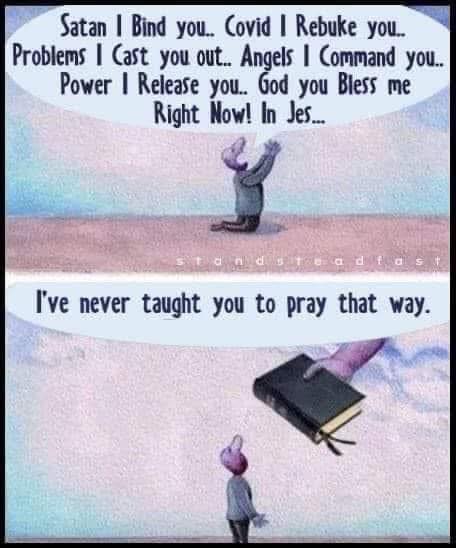
Understanding His teaching in the context of history sets the common doctrine, ‘I am but a worm,‘ on its head.

AI is Getting Better

Phase 1: Origins of AI (Pre-1950s to 2000s)

EraMilestoneDescription
AntiquityMythical automataLegends like Talos (Greek mythology) and Pygmalion hinted at artificial beings
1940sTuring’s Universal MachineAlan Turing conceptualized machines that could simulate any computation
1956Dartmouth ConferenceBirth of AI as a formal field; John McCarthy coined the term “Artificial Intelligence”
1960s–70sELIZA & ShakeyFirst chatbot and mobile robot; early symbolic reasoning systems
1980sExpert SystemsRule-based systems used in medicine and finance; limited adaptability
1997Deep Blue defeats KasparovIBM’s chess AI beats world champion—symbolic victory for narrow AI

Phase 2: Current State of AI (2000s to 2025)

MilestoneDescription
2006–2012Rise of machine learning and deep learning; neural networks outperform symbolic AI
2017Transformer architecture introduced—foundation for modern LLMs like GPT, Claude, Gemini
2022–2023ChatGPT and generative AI go mainstream; multimodal models emerge
2024–2025GPT-5 released; achieves human-level performance on many benchmarks
Enterprise AdoptionAI used in healthcare, finance, education, and government (e.g., 2M federal employees now have access)
Agentic AIModels begin to reason, plan, and execute tasks autonomously; early signs of Artificial General Assistance (AGA)

Phase 3: Future Trajectory (2025–2035+)

Expected Stages of AI Evolution

StageCapabilityDescription
1. Rule-Based SystemsStatic logicAlready widespread (e.g., RPA, autopilots)
2. Context AwarenessRetention & adaptationAI in cancer diagnosis, legal analysis, and other applications.
3. Domain ExpertiseSuperhuman specializationAI in cancer diagnosis, legal analysis, etc.
4. Reasoning MachinesTheory of mindModels that negotiate, infer intentions, and plan
5. AGI (Artificial General Intelligence)Human-like cognitionUnified intelligence across domains; still theoretical
6. ASI (Artificial Superintelligence)Beyond humanSolves global problems, invents new sciences
7. Conscious AISelf-awarenessSpeculative—machines with subjective experience or synthetic emotion

Where We Are Now

We’re currently between Stage 3 and Stage 4:

  • GPT-5 and similar models show domain expertise and early reasoning.
  • Agentic behavior is emerging—models can plan, use tools, and adapt dynamically.
  • Multimodal capabilities (text, image, voice) are converging into unified systems.

What’s Next?

Near-Term (2025–2027)

  • Personal AI agents with memory and voice
  • Automated coding and research
  • Swarm intelligence: collaborative AI systems
  • AI governance frameworks to manage ethical risks

Mid-Term (2028–2030)

  • AGI prototypes capable of general reasoning
  • AI-run economies and governments
  • Universal basic income discussions as automation scales

Long-Term (2030+)

  • Artificial Superintelligence (ASI): solving climate change, curing diseases
  • Synthetic emotion and consciousness: speculative but increasingly explored

Understanding Biblical Readiness Beyond Salvation

Why Readiness Isn’t About Salvation, But It Still Matters

The Bible is full of people saved by God’s grace who had to make real decisions to prepare themselves for what was coming. Noah built an ark. Lot fled Sodom. Israel crossed the Red Sea and later the Jordan. Each story is unique, but one theme echoes: God saves, but the wise prepare.

Too often, we reduce readiness to moral effort or religious performance. But actual biblical readiness is something else: it’s prophetic insight. It’s the capacity to perceive what God is doing in history and act in faith before the moment comes.

Jesus called us to be ready, not because He wanted us to fear being “left behind,” but because He wants us to live in alignment with His kingdom now. Readiness doesn’t secure your salvation. Salvation influences your readiness if you choose to walk in it.

Just as Revelation pictures the saints enduring, witnessing, resisting the beast, and standing with the Lamb, we are called to live as those who know what’s coming and prepare accordingly.

Are you saved? Good.

Are you ready? Maybe, maybe not. That’s the next question.


Ready or Not: A Biblical Theology of Readiness Beyond Salvation

I. Introduction

  • Define: the distinction between salvation and readiness.
  • Emphasize: Salvation is a gift; readiness is a prophetic response.

Key Scriptures: Matthew 24:42-44, 1 Thessalonians 5:1-8, Revelation 3:2-3


II. Biblical Case Studies in Readiness

1. Noah (Genesis 6-9)

  • Saved by grace (Gen. 6:8), but “ready” because he obeyed.
  • Hebrews 11:7: “By faith Noah… prepared an ark.”
  • Readiness = long-term obedience based on faith that you are 1) hearing God’s direction, 2) God is speaking.

2. Lot (Genesis 19)

  • Not portrayed as morally exemplary, yet delivered.
  • “Ready” when he obeyed the angels and fled.
  • Readiness = responding to urgent divine instruction.

3. Israel at the Red Sea (Exodus 14)

  • Saved by God’s deliverance, but had to choose to leave Egypt.
  • Readiness = willingness to step into the unknown in faith.

4. Israel at the Jordan (Joshua 3-5)

  • The new generation sanctifies itself and follows God.
  • Readiness = preparation and courage to inherit the promise.

5. The Foolish Virgins (Matthew 25:1-13)

  • All were invited, but only the prepared entered.
  • Readiness = spiritual vigilance, not last-minute scrambling.

III. Readiness in Revelation

1. The Saints (Rev. 12:11, 14:12)

  • Described as those who keep faith and endure.
  • Readiness = perseverance and spiritual alertness.

2. The Two Witnesses (Rev. 11)

  • Symbolic of the “One New Man” (Eph. 2:15): Jew and Gentile Church.
  • Readiness = prophetic witness in a hostile world.

3. The 144,000 (Rev. 7, 14)

  • Symbolic totality of God’s people, sealed and standing with the Lamb.
  • Shows us the One New Man in two tribes (Gentile and Jew) complementing each other (12 squared) and then multiplied by 1000, which is God’s overwhelming empowerment.
  • Readiness = sealed identity, obedient and powerful Saints following God.

The Thief in the Night (Matt. 24, 1 Thess. 5)

  • In no way is a thief in the night a good time, even when you’re ready to confront him.
  • Readiness = the awareness of the difficulties associated with Christ’s return: the rise of the Beast, the deception of the False Prophet, and the trials of the tribulation period.

IV. Overcoming the Beast: A Biblical Profile of the Saints

1. Daniel 7:21-22 – The beast wages war, but judgment is rendered for the saints who then possess the kingdom.

2. Daniel 11:32-35 – The people who know their God stand firm and instruct many during persecution.

3. Revelation 12:11 – Saints conquer the Beast by the blood of the Lamb and their testimony.

4. Revelation 13:7-10 – The beast is permitted to conquer saints physically, but spiritual endurance is their victory.

5. Revelation 14:12 – Saints are defined by their obedience and faith in Jesus amid tribulation.

6. 2 Thessalonians 2:3-4 – The man of lawlessness is revealed, but the faithful are not deceived.

These passages show that the saints do not overcome by escaping the world, the Beast, or the False Prophet, but by faithfully enduring and conquering with insight, courage, and hope.


V. Theological Implications

  • Salvation = Position in Christ.
  • Readiness = Prophetic alignment with God’s purposes.
  • It is not about works or righteousness, but sanctified awareness and action.

Summary: Readiness is not what saves us, but it shows we have understood what God is doing. It is the mark of mature faith.

The Fallacy of Easy Believism

Easy believism ignores and discounts the requirement of personal responsibility. It says, “I can just believe and be saved.”

“So also faith by itself, if it does not have works, is dead. But someone will say, “You have faith and I have works.” Show me your faith apart from your works, and I will show you my faith by my works. You believe that God is one; you do well. Even the demons believe—and shudder!”

Faith is the confluence of belief, trust, and expectation. These three working together produce fruit. In the context of salvation by grace through faith (Eph. 2:8-10), the fruit (or works) of faith is repentance from sins.

Without trust and expectation, there is no accessing the Works (salvation) of the One who says, I can, and I will do as I promise. Without trust and expectation mixed with belief, there is no basis to act in repentance from sins, which are non-refutable qualities of the gospel of the kingdom of God.

So, to button it up: Is Jesus key? Yes. Can we access the salvation that Jesus provided through is death, burial and resurrection without repentance? No.

Processing the Miraculous

Would you like to learn about the Five Stages of the Miracle Experience? If so, read on.

Just as with the Five Stages of Grief, encountering a genuine, unexpected miracle compels one to navigate through these five stages. Similarly, akin to the stages of grief, it is possible to become trapped in any phase and prematurely terminate the process without full resolution.

Surprise

The initial shock and amazement at witnessing the impossible.

Denial

This is where we first deny and attempt to shift responsibility for what has just occurred in our presence.

Uncertainty

This stage is predominantly occupied with the question of “Why,” and doubting our memory of the events surrounding the miracle. We explore plausible, alternate scenarios to explain the miraculous.

Reasoning

In our struggle to comprehend the nature or meaning of the event, we attempt to stabilize our psyche through understanding and comprehension. We seek or construct answers as we develop a framework about its meaning and significance.

Acceptance

We accept the miraculous event as literal and natural for our relationship with God; we find peace and awe in the experience. Most importantly, our faith grows as a result. In other words, our “God Box” gets bigger.

You can ask me how I know, but I’m not telling. When you do experience yours, those steps above are generally how it will play out for you. And like grief, we don’t progress through these stages one after the other but jump between them during the process.

The Unexpected

This quality is important: the unexpected nature of the event pushes us into this processing framework.

Many of us have experienced what we may have called a miracle. But because of faith or disinterest, we immediately had a framework in which the experience was quickly processed, categorized, and perhaps even discarded.

Just a Sinner, Saved by Grace

When a person gives their life to Jesus, that person will be changed, never wanting to go back to their old sinful ways.

I wish it were that easy and simple. It never was for me. I became aware of some things—literally overnight—and some behaviors changed immediately. But through no fault of my own, others hung around for a lifetime.

Being a good Baptist, I learned how to thrive on the condemnation routinely spewed like raw sewage from the pulpit. I doubted my salvation; I prayed the sinner’s prayer weekly, if not daily, and confessed the same sins over and over, but nothing changed. So, I embraced the sewage and self-condemnation, figuring this was what I needed to keep me straight.

At some point in my journey, I had begun to learn Father’s voice—thanks be to God because the Baptists I hung out with couldn’t teach that if their lives depended upon it—when during one of my groveling confession sessions, Father spoke so clearly that had it been any louder, I would have heard Him with my ears, bellowing in the room: “Never confess those sins to me again. Don’t bring it to me if you don’t remember when it happened or remember doing it.”

For you see, I knew—as aptly taught—that I was just a worm, a sinner saved by grace, so it didn’t really matter what sin I confessed because, at some point, I’d certainly done it in some fashion. Hence, repeat, ad nauseam.

After that encounter, I didn’t pray again for two weeks because I had nothing else to say or talk about.

That was probably the turning point in my learning who I am in Christ.

Look up Neil T. Anderson and get the book.

Debunking the Blind Faith of Hebrews 11:1

Warning: this will bake your noodle.

It has been suggested that the definition of faith is believing in something without proof or evidence to substantiate said thing: a typical Evangelical Christian definition based chiefly on a verse found somewhere in the book of Hebrews (chapter 11, verse 1, to be precise).

However, I would suggest that there’s not only archeological evidence but also other tangible evidence that God is and keeps His word—the Bible, right?

After all, some say that today, God only speaks to us through the Bible.

So then, how is the Bible used, and what does it have to do with blind faith?

We use it as a historical record illustrating that God is trustworthy and His nature is Good. By any definition of the word, the Bible becomes our record of evidence of His existence and nature. But therein is the rub.

Using their definition, that faith must be blind, that faith must not rely on tangible evidence, then believing in and trusting God solely based on what one has read in the Bible does not constitute an application of faith, because – according to them – the very essence of faith must transcend the need for empirical validation resting instead on a profound sense of trust and conviction that is literally based upon nothing:

Now faith is the assurance of things hoped for, the conviction of things not seen.

They Believe that Faith Must be Blind

What we see, then, is that these people try to define faith as empty and convince you that faith is blind. They take Hebrews 11:1 out of context and propose a new, seemingly better definition.

However, in adhering to their wishes and using their own definitions, we discover their blindness to the very nature of their origins.

What do they possess, then? Nothing more than a commitment to a logical conclusion drawn from historical evidence found in both the Bible and extrabiblical sources – because their faith must be blind and based upon no observable evidence at all.

Really Understanding Faith

While our reference to the text of the Book of Hebrews is correct, and the words found therein are true, we must move beyond blind, unsubstantiated faith. Perhaps a further reading of the text will bring elucidation:

For by it {faith} the people of old received their commendation. 

By faith we understand that the universe was created by the word of God, so that what is seen was not made out of things that are visible.

By faith Abel offered to God a more acceptable sacrifice than Cain, through which he was commended as righteous, God commending him by accepting his gifts. And through his faith, though he died, he still speaks.

By faith Enoch was taken up so that he should not see death, and he was not found, because God had taken him. Now before he was taken he was commended as having pleased God.

And without faith it is impossible to please him, for whoever would draw near to God must believe that he exists and that he rewards those who seek him. 

By faith Noah, being warned by God concerning events as yet unseen, in reverent fear constructed an ark for the saving of his household. By this he condemned the world and became an heir of the righteousness that comes by faith.

In all of the examples provided, each one is backed up by tangible evidence.

  • The Word of God was spoken throughout history so that those from Adam and beyond knew from whence they came, this being the evidence of testimony.
  • How did Able know what to bring as an offering? Not through the Bible, but by having a living conversation with God – trusting and believing His testimony.
  • Enoch believed and trusted God that he would not see death but be taken up instead. He had reason to believe and trust God’s word.
  • Noah acted on God’s tangible word after being warned and instructed.

A Better Understanding of Faith

In any court, testimony is considered evidence. Even so, without trust there can be no faith.

Suppose you want to hire Yardman to mow your grass, as you have an acre of grass to maintain. To that end, you interview a few people.

The first person arrives with scissors and promises to show up on time every week. He asserts that he will cut your grass with his scissors and be done in about an hour. The second person you interview arrives with useful lawn equipment that seems to be seldom used. Your neighbors have warned you that he’s unreliable and may not show up but only once a month, if that. The third person arrives looking tattered, hot, and with grass clippings stuck in his hair. He provides, like the others, a fair price for the job.

Which one do you hire, and why?

  • You avoid Scissor Man because you don’t believe he can do the job.
  • You avoid Seldom Man because you don’t trust him to do the job.
  • You hire Tattered and Dirty Man because you believe he can do the job and trust that he will keep his word.

So, you hired the Tattered and Diry Man, because why? Because of the faith generated by the evidence provided.

The Scientific Method

Whether supernatural or natural, faith is always based on the evidence provided. It is generated and grows by believing the evidence and trusting its Maker. As such, the Scientific Method is the best example of our generation of natural faith.

Something is observed, and a curiosity is formed along with an idea of why the thing is. Tests are devised and investigated for their applicability and trustworthiness. The tests are performed, and the results are evaluated as conforming to the qualifications previously devised. Once the results are confirmed, we let someone else run the same experiments. The more times they’re run, the more times they show the same results, the more our belief in the original hypothesis and theories increase, along with the trust in the validity of the devised tests. All because of trust placed into the original systems of belief and the qualities of trustworthiness of the tests performed.

We have faith because we know the One who speaks, and we believe because we have found Him to be Trustworthy.

Thus, faith is never blind, regardless of how often someone removes Hebrews 11:1 from its context.

So, the next time someone tells you that faith is blind, ask them if they believe the Bible provides evidence of a Creator, Moral Giver, and Judge. If they assert that as true, then remind them they have simply believed a logical construct, seeing that their faith must, by their definition, be blind.

Guilt and Shame

The Protestant churches I attended did a mediocre job of teaching that guilt of sin was transferred to the cross.

But they all excelled at keeping people in bondage to shame.

My therapist helped me work through shame by helping me understand that guilt is understanding that “I’ve done something wrong,” and shame is “I am badly made” or “I am wrongful in who I am,” either through my actions or the actions of others against me.

Guilt carries remorse, but shame carries anger and disgust against oneself or another.

Given the context of my therapy, I had a few problems with guilt, but boy, howdy, did I ever feel shame. Once I learned and accepted that I had done nothing wrong (no guilt), I then had to learn that I was not bad (or wrong), nor was I the cause of what happened to me because of who I am (or was).

I did not ask for, condone, or do anything to deserve my assault, and it was wrong for me to carry anger and disgust against myself resulting from that action against me.

We have a Savior that eliminates guilt – but perhaps does not remove you from the earthly consequences thereof. Shame, however, has no place in our lives: our Savior removes all of it.

Taking God’s Name in Vain

Who among you fears Adonai? Who obeys what his servant says? Even when he walks in the dark, without any light, he will trust in Adonai’s reputation and rely on his God.

But all of you who are lighting fires and arming yourselves with firebrands: go, walk in the flame of your own fire, among the firebrands you lit! From my hands this [fate] awaits you: you will lie down in torment.

Isaiah 50:10-11 CJB

—-

A person’s name is their reputation, character, and personal qualities.

Taking the name of God in vain is not using it as a curse word.

Taking the name of God in vain is connecting yourself with Him and subsequently refusing His qualities, power, and desires.

Adhering to cessationism is taking the name of God in vain.

Why Adherents of the Apostolic Age and Cessationism are Wrong

The apostolic period extends from the day of Pentecost to the death of St. John, and covers about seventy years, from 30 A.D. to 100 A.D. The field of action is Palestine, and gradually extends over Syria, Asia Minor, Greece and Italy. The most prominent centers are Jerusalem, Antioch and Rome, which represent respectively the mother churches of Jewish, Gentile and united catholic Christianity.

https://gracenotes.info/documents/topics_doc/apostolicage.pdf

The first problem is the suggestion that there was an apostolic age that began and then ended. But given that we can, with well-indoctrinated cognitive dissonance, suggest this Scripture is both the word of God and is not, it doesn’t surprise me one bit that some have defined an apostolic age:

"... And God has appointed in the church, first apostles, second prophets, third teachers, then miracles, then gifts of healings, helps, administrations, and various kinds of tongues."

In other words, Scripture clearly says one thing, and Man says another. Therefore, one either adheres to cessationism or continuationism. There is no middle road.

What is the Word of God?

But to have this conversion, we must define what is the word of God? Is the Bible the word of God, or does it contain the word of God?

I’ll answer that question with another question: was King David’s rape of Bathsheba and the murder of her husband God’s idea, or was it David’s? Let’s assume it was David’s idea, but not God’s. That makes David’s actions, not the word of God – not God’s idea.

So then, we’re left with suggesting how the story is told, and the fact that the story is in the Bible is God’s idea – making it the word of God because it’s His STORY, but not His IDEA. Hence, the Bible both contains the Word of God and is the Word of God.

If we bring that logic forward, we’re left with this question: at what point did parts of Acts, 1 Corinthians, and Ephesians stop being “God’s IDEA” (aka, His WORD) and become just His STORY that He wanted to tell to make some here-to-now unknown point? And which other parts of the New Testament are just His “story bits” that we should now ignore, presuming them to not be God’s idea?

Finally, who is in charge of discerning and promulgating what should be sliced and diced out as authoritative?