The Subtle Exchange: When the Witness Becomes the Object of Worship

And this, Children, is all we need to know about Spirit vs. System. Otherwise understood as, “why I left the party” – the church, that is.

Consider this opinion: A Southern Baptist minister, the father of the person who wrote “Shine,” confirms that “Shine” was not “a religious song.” Rather, it was about “searching, longing … spirit, not scripture.” ( link )

At some point, I finally realized that for me, Protestantism was more about worshiping the message (sermon), the construct (Pastor, church), and the material (Bible) than about communion (worship) with Father, Son, and Holy Spirit.

And if I were to offer an opinion, that’s why my church today (an Eastern Orthodox flavor) has grown significantly over the past 5 or 6 years. It is because the new folks joining have experienced something similar. At least, according to what they’re telling me.

But notice these subtle bits: in classical Christian theology, especially in Eastern Orthodoxy:

  • The Son is the living Word (John 1:1), not the printed text.
  • The Spirit is the life-giver, not the book.
  • Scripture is inspired by the Spirit, but it is not identical to Him.

In my Baptist tradition, I eventually noticed something important. The Bible was being seen as the third entity in a quasi-trinity construct of sermon–pastor–Bible. At the same time, I noticed that the Spirit became secondary, if not unnecessary, through the same viewpoint.

The text, in function, replaced the living Spirit. Which is exactly what has happened in some circles. So, I left the church when I realized I was subtly being taught to relate to:

  • A system
  • A message
  • A material object

instead of:

  • A living Father
  • A living Son
  • A living Spirit

Eventually, years later, I learned about Orthodoxy and planted my feet there. In other words, I moved from mediated abstraction to participatory communion.

“The grace of the Lord Jesus Christ and the love of God and the fellowship of the Holy Spirit be with you all.”
— 2 Corinthians 13:14 (ESV)

Notice what we can glean from the scripture above:
– Grace (Son)
– Love (Father)
– Fellowship (Spirit)

In other words, what I discovered in the interim was the Spirit is not merely an idea or inspiration; He is the agent of participation.

For some people, including me many years ago, that concept wasn’t truly biblical: I viewed the Bible as my primary focus of worship, and the church was my participation.

The Subtle Shift Towards Idolatry

I worshiped the Bible, the pastor, and the church itself. It wasn’t just a religious idea either – church participation was essentially my religion. Therefore, the notion that the Holy Spirit is the agent of participation didn’t fit within my paradigm of “The Church,” nor did it resonate with me personally.

I learned, and adopted a belief system that asserted this: the only way to be assured one was consistently “right with God”, was to read the right thing (the KJV), believe the right thing, therefore enabling one to do the right thing, and ultimately, be right with God.

What I fell into was common category collapse, and idolatry. However, the Logos is:
– Eternal
– Personal
– Divine
– The Second Person of the Trinity

Contrasted with where I was:

– The Bible is not eternal (past/present/future – it came into being)
– The Bible is not a divine person.
– The Bible is not incarnate.
– The Bible did not rise from the dead.

But …

– The Word became flesh.
– The Word did not become a book.
– And an anthology (a Book) did not become the Word.

Those distinctions are absolutely foundational in historic Christianity.

It Begins with Subtle Notions, and then Idolatry

  1. Jesus is the Word.
  2. The Bible is the Word of God.
  3. Therefore, the Bible is Jesus.

But those two uses of “Word” are not identical.

  • “Word” (Logos) in John 1 refers to a divine Person.
  • “Word of God” as applied to Scripture refers to inspired revelation.

Conflating them turns a witness (the Bible) into the thing witnessed (Jesus). The problem? That is not a small mistake. That’s a theological category collapse mixed with confusion.

Biblical idolatry is not merely bowing to an object; it is:

  • Locating ultimate authority in something created.
  • Making a mediator (of salvation) other than Christ.
  • Treating a derivative thing as the source of life (the proper position).

Paul says people

“… exchanged the glory of the immortal God for images”
— Romans 1:23, ESV

Notice: an exchange takes place.

Idolatry is a displacement; it is an exchange of one thing for another.

How the System Develops

The system typically develops like this

Step 1 — Absolute Textual Authority

The Bible is the final authority.” sola Scriptura.

So far, that is traditionally orthodox (following or conforming to the traditional or generally accepted rules or beliefs)

Step 2 — Interpretive Necessity

But the Bible requires interpretation. So practically:

  • Pastor = Authorized interpreter.

You’ve heard this before: we encourage everyone to find a “good, Bible-teaching Church.”

Step 3 — Delegated Conscience

And once we find that church and perhaps the correct translation of the Bible, we fall into the trap where what is caught becomes more important than what is taught.

As congregants, we delegate our Conscious, we learn:

  • To trust the pastor’s reading.
  • To measure spirituality by agreement.
  • To treat deviation as rebellion.

And viola: at this point, the structure is active, and it becomes idolatrous when these shifts occur:

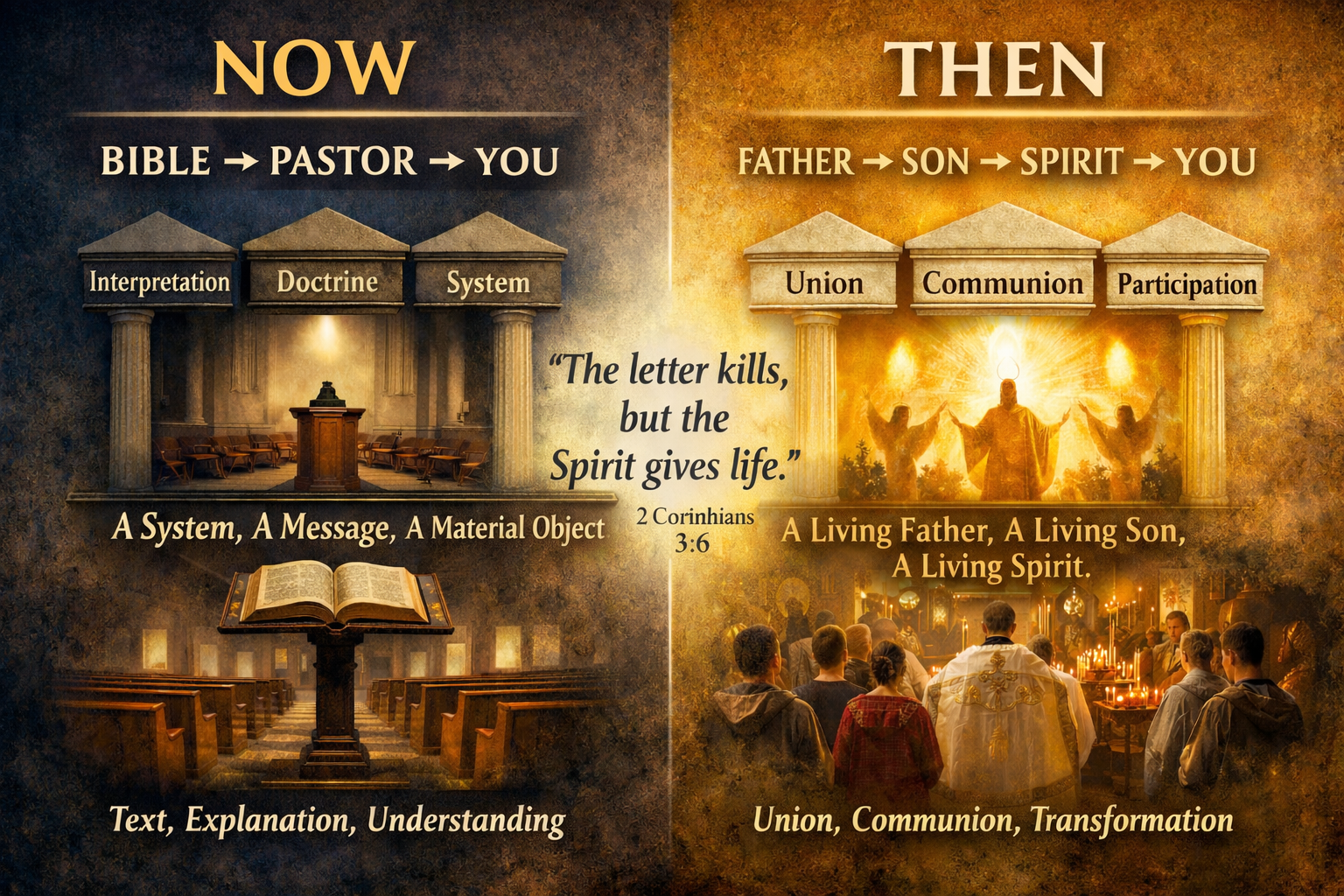
Instead of: God → Christ → Spirit → You,
It becomes: Bible → Pastor → You

By this time, we don’t even notice what has disappeared. Instead of living in the mediation of Christ through the Spirit, the Spirit is functionally replaced by explanation, good sermons, and proper interpretation of sola Scriptura. It is replaced by the Bible and its interpretations. Hence, the necessity of a good, bible-teaching church.

We replace worshiping the Trinity with worshiping the interpretation and, by necessity, its surrounding constructs – including the Bible itself.

Then Vs. Now

In historic Trinitarian Christianity, salvation is participatory and ongoing:

  • The Father sends the Son.
  • The Son becomes incarnate.
  • The Spirit unites us to the Son.
  • Through union with the Son, we participate in the life of the Father

Most people understand salvation as I was saved, I am being saved, and I shall be saved.

That’s dynamic, relational, mystical, sacramental, and continuous. The Spirit is not an idea. The Spirit is the one who makes Christ present, every day, all the time.

John 14:26 (Listen)

But the Helper, the Holy Spirit, whom the Father will send in my name, he will teach you all things and bring to your remembrance all that I have said to you.

(ESV)

Essentially, what I’m saying is the Spirit’s mediating role was displaced, and what filled the vacuum was

  • Explanation.
  • Interpretation.
  • Correct doctrine.
  • Right exegesis.

Making the structural shifts from

  • Christ → Spirit → Participation

to

  • Text → Interpretation → Understanding
What’s Missing from the Construct?

The Spirit’s role is not to explain Christ. The Spirit’s role is to unite us to Christ.

Explanation is not mediation. Understanding is not union. Agreement is not communion. That’s the thing missing, the disappearance and emptiness we’ve all experienced but didn’t know how to describe or explain.

For some of us, it transformed into a sense of legalism. Maybe some of us filled the gap with Bible reading. But if you’re a legalist like I was, then you’re not reading the Bible to commune with God: you’re reading it to learn proper doctrine so you can stay out of trouble, out of way of God the Mighty Smiter.

Maybe, if you’re like me, you replaced it with prayer. But having never been illuminated to our Father’s conversational desires, you ended up just making a prayer a checklist of urgent begging.

So, in feeling and believing that we must be right and act appropriately, we urgently searched for the right church, the right teaching, and the right Bible to ensure our right position and acceptableness before God.

In actuality, this is where we landed
What we LostWhat we found
Union was replaced with agreementInstead of being in Christ, believers are measured by whether they affirm correct propositions about Christ.
Communion was replaced with comprehensionInstead of sharing in Christ’s life, the goal becomes mastering theological content.
Ontological participation was replaced with cognitive accuracyTransformation is assumed to occur through right thinking rather than Spirit-mediated incorporation into Christ.
The Spirit’s presence was replaced with methodological precisionConfidence shifts from divine indwelling to hermeneutical technique.
Illumination was replaced with informationThe Spirit’s role in making Christ present is quietly reduced to helping us understand the text correctly.
Corporate participation was replaced with sermon centralityGathered worship becomes primarily instructional rather than participatory in Christ’s life.
We sit down, shut up, pay up, get up, and leave.
Sacramental reality was replaced with memorial symbolismMeans of grace become reminders rather than Spirit-mediated participation.
Spiritual formation was replaced with doctrinal alignmentMaturity is defined by theological correctness rather than increasing participation in divine life.
The living voice of Christ was replaced with historical reconstructionThe text becomes a closed historical artifact rather than the Spirit’s present instrument of communion.
Dependence was replaced with systemThe Spirit’s active mediation is functionally replaced by confessional structures and theological systems.
Transformation was replaced with moral effortInstead of participation in Christ’s life, change is pursued through discipline and willpower.
Mystery was replaced with controlWhere participation implies divine mystery, interpretation offers mastery and containment.
Why Sola Scriptura Can Drift this Way

In its most careful form, sola Scriptura simply says Scripture is the final norm. But functionally, in some contexts, it erodes and transforms its environment. It instills something else, things that are subtly caught:

  • Scripture is the only reliable authority.
  • — Therefore doctrine must be derived by interpretation.
    • — Therefore, the central act becomes a correct explanation.
      • — Therefore, spiritual maturity becomes doctrinal precision.

And gradually:

  • The pulpit becomes central.
  • The sermon becomes the high point.
  • Interpretation becomes sacred.

The Spirit’s experiential mediation fades into the background. It’s never really denied, not outright. But replaced? Absolutely.

But REALLY? What Has Disappeared?

… because nothing looks gone.

  • We still say “Father, Son, and Holy Spirit.”
  • We still read Scripture.
  • We still pray.

But what may disappear is:

  • The sense that salvation is participation in divine life.
  • The sense that worship is entering heavenly reality.
  • The sense that the Spirit is actively uniting us to Christ in the present.
  • Instead faith becomes …

Correctly thinking about what Christ did.

  • Rather than:

Being united to what Christ is.

And that is a massive theological and doctrinal shift that happened right under our noses – most notably, kicked off during the Reformation.

This is also why we aren’t bothered by hearing the same evangelical message again and again. “That was a great sermon, Pastor…” We’ve heard it ten times, but it’s still great – because it forces us to think correctly about what Jesus did.

Worship Shifted from God to Constructs

I’m right about something psychologically inevitable, and don’t miss this:

When interpretation becomes central,
then the structures that guard interpretation become sacred.

  • The theological system.
  • The pastor who preserves it.
  • The institution that protects it.

And disagreement becomes an existential threat.

Which is why (precisely why) there are so many protestant denominations and churches. At this point, we’re not defending communion with the Trinity, as we did during the Ecumenical Councils, where the Nicene Creed was developed. Today we’re defending a system of explanation. And that can absolutely become a form of worship, aka, “the creature, rather than the Creator.”

A Necessary Nuance

But there’s a balance: scripture itself speaks of:

  • Teaching
  • Sound doctrine
  • Guarding the faith

So, the solution is not anti-doctrinal, regressive, or anti-theological. The danger isn’t explanation, sermons, or Bible translations. The danger is when explanation replaces participation.

The early Church never separated doctrine from worship.

Doctrine safeguarded participation.
It did not substitute for it.

I’m not simply critiquing Protestantism, Catholicism, or Orthodoxy. I’m asking something deeper: what is Christianity fundamentally?

Is it:

  • Right interpretation of sacred text?

Or is it:

  • Participation in the life of the Triune God?

If it is the latter, then anything that reduces faith to interpretive correctness — even with good intentions — risks hollowing out its center.

“the letter kills, but the Spirit gives life.”
— 2 Corinthians 3:6 (ESV)
A Rebuttal of the How to Pray Meme

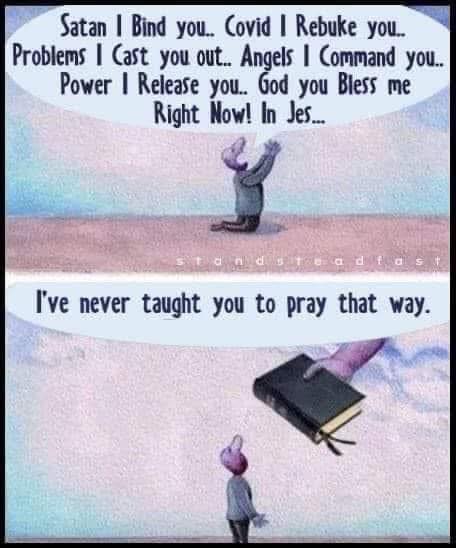
In this blog, I am presenting a rebuttal to the “God never taught you to pray that way” meme. I will attempt to remain grounded in Greek command language, and the juridical semantics of the Hebrew term תפילה (tefillah).

The aim is not to defend every phrase in the prayer depicted in the meme, but to reject a false dilemma that underlies the meme itself. I will argue that directive speech can be legitimate when exercised within delegated authority and that biblical prayer cannot be reduced to polite requests or the normative begging posture often taught by church leaders or depicted by popular media.

The Meme’s False Dilemma

While the meme is rhetorically clean and theologically satisfying to many, it rests on a major unstated assumption:

Prayer must be fundamentally petitionary (begging) and command-form speech is therefore inherently unbiblical.

That assumption does not survive contact with:

  • the Greek grammar of Jesus’ commands
  • how authority actually functions in the New Testament world
  • the Hebrew semantics underlying what Scripture calls “prayer”

Part I: The Greek Frame

ἐντέλλομαι (entellomai, “to command or charge”) and Delegated Authority

Jesus Explicitly Frames Discipleship as Obedience to Commands

In Matthew 28:20, Jesus commissions the apostles to teach:

  • πάντα ὅσα ἐνετειλάμην ὑμῖν
  • (panta hosa eneteilamēn hymin)
  • “everything I commanded or charged you.”

The verb derives from ἐντέλλομαι (entellomai), which means to command, charge, or direct with authority. This verb belongs to contexts where directives are meant to be executed, not merely remembered. The Great Commission is therefore not framed as “teach them what I said,” but “teach them what I charged you to obey.”

This implies several things:

  • Authority flows from Jesus downward
  • The disciple is expected to act, not merely speak
  • The charge includes imitation of authoritative practice, not just verbal doctrine

This is where the meme’s critique becomes overbroad. It treats prayer posture as though Jesus authorized only deferential asking, when Jesus also authorized commissioned execution under his authority.

Delegated Authority Is Explicit: ἐξουσία (exousia)

Just prior to using ἐνετειλάμην (“I commanded” or “I charged”), Jesus grounds the entire mission in this declaration:

  • ἐδόθη μοι πᾶσα ἐξουσία
  • (edothē moi pasa exousia)
  • “All authority has been given to me.” (Matthew 28:18)

ἐξουσία (exousia) refers to authority or delegated power. This is the operating logic of the commission. Jesus possesses authority and delegates action under that authority.

In ancient command structures such as military, household, and legal systems, a subordinate does not request permission for every operational step. He executes within the scope of what has been authorized. That does not mean the subordinate outranks the superior. It means he functions as an agent.

So the relevant question is not whether command-form speech is always wrong. The relevant question is this:

Is the speaker acting as a delegated agent under Christ’s authority, or as a sole originator of power?

Rabbinic Authority and Charismatic Authority Are Not Opposites

Modern debates often frame this as a binary, one or the other argument:

  • Rabbinic authority is textual, interpretive, and disciplined
  • Charismatic authority is experiential, miraculous, and power-oriented

This opposition is anachronistic when applied to Jesus and the apostles.

In first-century Jewish life, disciples often functioned as authorized agents under shaliach logic. A disciple was expected to:

  • learn not only the rabbi’s words but the rabbi’s way
  • imitate patterns and methods
  • represent the teacher’s authority within the teacher’s domain

Jesus functions as both a rabbinic teacher shaping interpretation and ethics, and a charismatic authority exercising power over illness and hostile spiritual forces.

Crucially, Jesus treats that power as delegable (e.g., commissioning of the 70/72). He authorizes his followers to act under his commission.

Charismatic action, when delegated and bounded, is not anti-rabbinic. It becomes an expression of rabbinic agency. Disciples execute the teacher’s charge.

Jesus Himself Used Directive Speech

A central weakness in the meme is the implication that Jesus did not model command-form engagement with the world.

Yet Jesus repeatedly uses directive speech toward non-divine targets:

  • to sickness: “Be clean.”
  • to spirits: “Come out.”
  • to nature: “Peace, be still.”
  • to bodies: “Get up and walk.”

These are performative speech acts. The language is intended to effect change, not merely to request it. Jesus never begs the Father to heal a person in these encounters.

Observers explicitly identify this mode of speech as authority. “He commands even the unclean spirits, and they obey him” (Mark 1:27).

If the Great Commission’s commands include embodied imitation, then directive speech, when exercised as delegated authority, cannot be dismissed as un-Jesus-like.

The real debate is not directive speech versus biblical prayer. The debate is directive speech within scope versus directive speech that claims self-originating power.

The Real Fault Line: Grammar Toward God Versus Standing Under God

Critics often focus on an imperative phrase such as “God, you bless me right now.”

Two clarifications are essential.

Imperative Grammar Is Not Automatically Theological Domination

In biblical prayer, imperatives toward God are common, especially in the Psalms. “Hear,” “remember,” and “listen” appear frequently. The imperative form can express covenantal urgency, confidence, and appeal without implying metaphysical superiority.

Grammar alone does not settle the issue.

The Real Issue Is Attribution of Authority

The legitimate correction is not:

  • “God never taught you to pray that way.”
  • The precise correction is:
  • “You were never authorized to speak as though authority originates in you.”

The meme collapses this distinction, assuming readers will infer it – hoping you will “catch” a meaning that is not there. The New Testament framework of authority does not allow that collapse.

The Hebrew Frame: Prayer Is Not Primarily Begging

When we move beneath the New Testament into Israel’s conceptual world, the meme’s assumption collapses further.

Hebrew Has No Single Word Equivalent to “Prayer”

Biblical Hebrew distributes what English collapses into “prayer” across multiple verbs and postures:

  • crying out
  • appealing
  • seeking favor
  • requesting
  • interceding
  • arguing a case
  • covenantal complaint
  • confession

English flattens this diversity. Hebrew does not.

The Root פלל (palal)

פָּלַל (palal) carries the sense of intervening, arbitrating, judging, or interposing oneself. The noun תְּפִלָּה (tefillah), commonly translated “prayer,” frequently carries juridical and covenantal overtones.

The primary verbal form for praying appears in the Hitpael stem:

הִתְפַּלֵּל (hitpalel)

Hitpael often indicates reflexive or self-involving action. To pray, in this sense, is to place oneself into the matter before God. It is active positioning, not passive piety.

This juridical sense does not exclude devotion or dependence. It defines the structural posture in which devotion occurs.

Covenant Complaint and Appeal

Hebrew prayer frequently includes pleading, lament, protest, argument, and appeal to covenant faithfulness. This is why prayers such as Psalm 44 or Habakkuk 1 can sound confrontational in English while remaining fully legitimate.

Biblical prayer is not defined by a single tone or grammatical mood. It is defined by covenantal standing and alignment with rightful authority.

Reframing the Debate: Prayer as Standing and Delegation

When the Greek and Hebrew frameworks are brought together, a clearer picture emerges.

The Greek lens shows:

  • Jesus commissions with ἐντέλλομαι
  • the commission is grounded in ἐξουσία
  • disciples act as delegated agents

The Hebrew lens shows:

  • prayer as tefillah is covenantal interposition
  • praying as hitpalel is entering the matter before God

Therefore, the meme’s categorical dismissal fails.

Command-form speech toward hostile forces or conditions is not automatically illegitimate when practiced as delegated authority under Christ.

Bold speech toward God is not automatically illegitimate because Hebrew prayer often operates covenantally and juridically.

The decisive test is standing and attribution:

  • Are you positioned under God’s authority?
  • Are you acting as an authorized agent, or as a self-originating source?

“In Your Name”: Why Formula Without Standing Fails

In Matthew 7, speakers appeal to Jesus:

“Did we not prophesy in your name, cast out demons in your name, and do mighty works in your name?”

Jesus responds:

“I never knew you.”

The issue is not activity, grammar, or terminology. It is standing.

They speak toward Christ but are not positioned under Christ’s authority.

“In your name” is not a formula. It is a relational and legal status. Invocation without recognition fails.

Final Synthesis

Prayer and action are not validated by formulas.
Authority is not validated by results.
Standing is not created by invocation.

The biblical framework consistently returns to the same axis:

Position before performance.
Relationship before results.
Delegation before declaration.

That is where the meme fails, and that is where Scripture insists the conversation must remain.

The Lord’s Prayer

Framing Principle

The Lord’s Prayer does not teach prayer as begging. It teaches prayer as positioning under authority, followed by authorized engagement.

This is exactly what both models expect.

The Two Models, Stated Precisely

Hebrew Model (תְּפִלָּה / הִתְפַּלֵּל)

Prayer is:

  • covenantal standing before rightful authority
  • juridical orientation
  • entering the matter under God’s rule
  • appeal grounded in relationship, not leverage

Core question: On what standing do I speak?

Greek Model (προσεύχομαι)

Prayer is:

  • directed speech toward God
  • relational orientation
  • acknowledgment of dependence
  • alignment with divine will and authority

Core question:
Toward whom am I directing myself, and in what posture?

The Lord’s Prayer satisfies both questions simultaneously, line by line.

Line-by-Line Analysis

1. “Our Father in heaven”

Greek consistency

  • Direct address toward God (pros + euchomai)
  • Establishes relationship before request
  • Dependence is explicit

Hebrew consistency

  • Covenant identity is declared first
  • “Father” implies standing, not distance
  • This is court entry language, not supplication

Key point
No request is made yet. Position precedes petition.

2. “Hallowed be your name”

Greek

  • Orientation toward God’s holiness
  • Reverence establishes relational posture

Hebrew

  • Sanctifying the Name is covenantal allegiance
  • The speaker aligns with God’s reputation and authority
  • This is a loyalty declaration

Key point
This is not asking God to become holy.
It is placing oneself under God’s holiness.

3. “Your kingdom come”

This is imperative grammar, directed toward God.

Greek

  • Imperatives in prayer are permitted
  • The direction remains toward God, not away from Him

Hebrew

  • This is covenant invocation
  • Calling for the manifestation of God’s rule
  • Equivalent to covenantal appeal for rightful authority to act

Key point
This is not domination.
It is invoking rightful authority.

4. “Your will be done, on earth as it is in heaven”

This line governs everything that follows.

Greek

  • Explicit submission of desire to God’s will
  • Prevents self-originating authority

Hebrew

  • Aligns the speaker with the heavenly court
  • Earth is petitioned to conform to divine order
  • The speaker positions themselves inside that alignment

Key point
Nothing in this prayer authorizes action outside God’s will.
This is the scope clause.

5. “Give us today our daily bread”

Greek

  • Legitimate petition
  • Dependence is acknowledged

Hebrew

  • Covenant provision language
  • Echoes wilderness provision
  • Appeal based on relationship, not merit

Key point
Request flows from standing, not desperation.

6. “Forgive us our debts, as we forgive our debtors”

Greek

  • Relational repair
  • Moral alignment with God

Hebrew

  • Explicit juridical language
  • Debt, forgiveness, obligation
  • The speaker submits themselves to covenant standards

Key point
The petitioner places themselves under judgment, not above it.

This is hitpalel in action: self-involving positioning.

7. “Do not lead us into temptation, but deliver us from the evil one”

Greek

  • Directed plea for protection
  • Dependence acknowledged

Hebrew

  • Appeal for covenant safeguarding
  • Recognition of hostile forces
  • Request for rightful authority to intervene

Key point
This is not passive fear.
It is appeal to the rightful protector.

8. Doxology (traditional):

“For yours is the kingdom, the power, and the glory”

Greek

  • Reorients all authority to God
  • Ends where it began: with God’s supremacy

Hebrew

  • Explicit attribution of authority
  • Prevents any misreading of earlier imperatives
  • Reinforces non-self-originating power

Key point
Authority is named, located, and returned to God alone.

Structural Summary

The Lord’s Prayer follows a deliberate architecture:

  1. Establish covenantal standing
  2. Align with God’s authority and will
  3. Invoke rightful rule
  4. Make bounded requests
  5. Submit to moral accountability
  6. Acknowledge dependence and threat
  7. Reaffirm God as sole authority source

This is textbook Hebrew tefillah and Greek proseuchomai operating together.

Why This Matters for the Debate About “Command-Form Prayer”

The Lord’s Prayer contains imperatives:

  • “Hallowed be”
  • “Your kingdom come”
  • “Your will be done”

Yet no one claims it is arrogant or illegitimate.

Why? Because:

  • authority is not claimed by the speaker
  • standing is covenantal, not performative
  • will and scope are explicitly bounded
  • attribution is consistently returned to God

This is the same framework as outlined earlier.

Final Synthesis

The Lord’s Prayer does not teach:

  • prayer as begging
  • prayer as technique
  • prayer as self-originating declaration

It teaches:

  • prayer as position before authority
  • prayer as alignment before action
  • prayer as delegated dependence

Which means:

The Lord’s Prayer is not a counter-example to bold or directive prayer.

It is the governing model that determines whether such prayer is legitimate or illegitimate based on standing, delegation, and attribution, not on grammar or tone.

That is why it coheres cleanly with both the Hebrew and Greek models of prayer.

Be aware of what teachers expect you to catch vs. what they actually teach.

Truth, Moral Failure, and the Limits of Discernment

Truth does not derive its authority from the moral consistency of the one who speaks it, but from the reality God created that the truth describes.

Debates about whether the work of a Christian author should be discarded after the discovery of moral failure often hinge on an unexamined assumption. The assumption is that three distinct forms of judgment belong to the same category. They do not. Moral evaluation, epistemic evaluation, and discernment serve different purposes, operate by different criteria, and answer different questions.

Moral evaluation asks whether an action or life conforms to ethical norms. Epistemic evaluation asks whether a claim is true, coherent, or reliable. Discernment concerns how a reader or community should engage with a work in light of both truth and moral considerations. Confusion arises when a failure in the first category is treated as a decisive judgment in the second, rather than as input to the third.

Christian theology has historically grounded epistemic authority not in personal righteousness but in creation itself. Scripture affirms that the world is intelligible because it is ordered by God, not because it is observed by the morally consistent. “The heavens declare the glory of God” (Psalm 19:1) regardless of who studies them. Human beings, made in God’s image (Genesis 1:26–27), possess genuine though finite capacities to perceive and articulate truth.

This framework underlies what theologians have described as common grace. John Calvin argues that God distributes real insight broadly, even among those whose lives are morally compromised (Institutes, II.2). Scripture reflects this reality repeatedly. David’s psalms remain central to Christian worship despite grave moral failure. Solomon’s wisdom continues to instruct despite his eventual corruption. Paul explicitly acknowledges that Christ can be proclaimed from corrupt motives while remaining genuinely proclaimed (Philippians 1:15–18).

If moral failure automatically invalidates epistemic authority, then truth becomes unstable. Knowledge would remain provisionally acceptable only until new biographical information emerges. Epistemic evaluation would be displaced by moral investigation, and truth would be treated as morally contagious rather than as correspondence to reality. This is not how Scripture treats truth, nor how responsible scholarship operates.

A common counterargument holds that continuing to use such work implicitly endorses the author or normalizes their sin. This objection confuses epistemic evaluation with discernment. Discernment may indeed require contextualization, caution, or limitation of use. It does not require pretending that true insights become false once their messenger is exposed as broken. Reading Augustine does not endorse his sexual immorality, nor does praying the psalms endorse David’s abuse of power. Christian maturity consists precisely in holding moral clarity and intellectual honesty together.

Another objection claims that spiritual formation materials differ categorically from scientific or academic works because they shape character. Yet Scripture itself refuses this separation. Wisdom literature, prophecy, and apostolic teaching are mediated through deeply flawed individuals, and readers are consistently instructed to test what is taught rather than to certify the moral completeness of the teacher (Acts 17:11; 1 Thessalonians 5:21). Formation depends on truth rightly received, not on the moral perfection of its source.

Applied consistently, the rejection principle leads to untenable conclusions. It would require Christians to exclude non Christian sources from psychology, literature, or philosophy unless their authors are converted, and perhaps only to accept work produced after conversion. This position conflicts with the Christian doctrine of creation and with historic Christian engagement with learning. As Proverbs 2:6 states, “The Lord gives wisdom,” not “only through morally unblemished messengers.”

Philosophically, the distinction is well established. Thomas Aquinas grounds truth in the conformity of the intellect to reality, not in the virtue of the knower (Summa Theologiae, I.16). Alvin Plantinga similarly argues that Christian belief explains why human cognition can reliably produce true beliefs without requiring moral perfection as a prerequisite (Warranted Christian Belief).

None of this minimizes the seriousness of moral failure. Moral evaluation must remain uncompromising. But epistemic evaluation must remain principled, and discernment must remain disciplined. When these categories are collapsed, truth is destabilized and discernment is reduced to exclusion rather than wisdom.

Christian maturity requires holding these distinctions clearly. Truth remains grounded in the reality God has made, not in the moral consistency of those who describe it. Recognizing this does not weaken holiness. It makes discernment possible.

Three Distinct Forms of Judgment (Often Confused)

Much of the confusion in debates about moral failure and authorship arises from collapsing three distinct categories of judgment. Clarifying these categories is essential for disciplined discernment.

1. Moral Evaluation
Question: Is this action or pattern of behavior ethically wrong?
Focus: Character, conduct, responsibility, accountability.
Standards: Moral law, Scripture, conscience, ethical norms.

Moral evaluation addresses whether an individual’s actions conform to what is right and good. It is concerned with sin, repentance, accountability, and the protection of others. Moral failure rightly demands clear judgment and appropriate response.

2. Epistemic Evaluation
Question: Is this claim true, coherent, or reliable?
Focus: Truth value, accuracy, correspondence to reality.
Standards: Evidence, reason, coherence, fruitfulness.

Epistemic evaluation assesses whether an idea, insight, or argument is true or useful. It does not ask whether the speaker is morally upright, but whether what is being said corresponds to reality.

3. Discernment
Question: How should this work be engaged, used, limited, or contextualized?
Focus: Wisdom in application and reception.
Standards: Love of truth, moral clarity, pastoral sensitivity, prudence.

Discernment integrates moral and epistemic judgments without collapsing them. It considers audience, context, potential harm, and formative impact. Discernment may lead to caution, reframing, or limitation of use, but it does not require denying truth because of moral failure.

Category Collapse Occurs When:

  • Moral failure is treated as proof that a claim is false.
  • Using a work is assumed to endorse the author’s life.
  • Discernment is reduced to exclusion rather than wise engagement.

Turning the Other Cheek is not Passivity

The Backhanded Slap

In Jewish law, not all slaps were equal. The Mishnah tells us that if you slap a man with your palm, there’s a fine. But if you backhand him—well, now you’ve doubled it (Mishnah). Why? Because the backhand wasn’t just about sting, it was about shame. It was a master’s way of saying, “You’re beneath me.”

That little detail sheds a lot of light on Jesus’ words. When He said, “Turn the other cheek,” He wasn’t telling people to stand there and take a beating. He was telling them: don’t play their game of humiliation. Offer the other cheek, and suddenly the insulter can’t treat you like an inferior anymore without breaking his own code of conduct.

Josephus and the Weight of Insult

To Josephus, the Jewish historian who lived through the Roman wars, being humiliated was nearly the same as being wounded. He gives us story after story about how insults sparked violence.

One Roman governor, Florus, took money from the Temple treasury. When the Jews begged him not to commit such sacrilege, he mocked them and sent soldiers to beat and crucify the petitioners (Flavius Josephus, Wars 2.224–227).

Another story, from Antiquities 17.163, shows men punished severely for insulting Herod by tearing down one of his dedications. Insult was rebellion. Shame was a wound to the whole community.

That’s the world Jesus spoke into. That’s what makes His words so jarring.

Other Voices of the Time

And Josephus wasn’t alone. Seneca, the Roman Stoic, said it was small-minded to count up insults—better to ignore them. Philo, the Jewish philosopher, praised those who endured wrongs instead of inflicting them (Dialogues, Cato)

In other words, there was a countercurrent of thought in the ancient world: real strength is shown not by striking back, but by refusing to be ruled by insult.

4. The Subversive Message of Jesus

Put it all together, and you see the sharp edge of Jesus’ teaching:

  • The Mishnah shows us just how shameful a backhanded slap was.
  • Josephus shows us how honor and insult could lead to bloodshed.
  • Seneca and Philo remind us that endurance was seen as a higher way.

But Jesus didn’t echo philosophers. He turns the notion on its head and teaches something contrary to popular doctrines.

In going further, He says, “Turn the other cheek,” don’t play their honor-shame game. Instead, expose the injustice by refusing to accept the terms of humiliation.

That’s not a weakness. That’s a dignified, honorable display of defiant strength. It’s the quiet word of someone who knows their worth in God’s eyes, not in the approval of men.

Side-by-Side Comparison

(Josephus, the Mishnah, and contemporaneous voices)

SourceContentEmphasis
Mishnah Bava Kamma 8:6“If he slapped him on the cheek with the back of his hand, which is more degrading than a slap with the palm, he must give him four hundred dinars.”A backhand is twice as humiliating as an open-palm slap. Insult, not injury, is the main issue.
Josephus, Wars 2.224–227Florus robs the Temple, mocks the Jews’ pleas, unleashes soldiers to kill and flog, and crucifies many.Humiliation as a tool of domination. For Josephus, insult is as intolerable as physical attack.
Josephus, Antiquities 17.163Rebels insult Herod by destroying what he had dedicated. He punishes them harshly.Honor and insult drive political response. Public shame is treated as rebellion.
Jesus, Matthew 5:39“If anyone strikes you on the right cheek, turn to him the other also.”A radical command to refuse humiliation without retaliation. Dignity is preserved through nonviolent resistance.

The Teaching At that Time

In Jesus’ world, the backhanded slap was the ultimate way to belittle someone. The Mishnah shows us the legal weight: it cost double the fine of an ordinary slap. Josephus shows us that insults could spark riots, even war. To be shamed in public was as serious as being wounded.

And yet when Jesus said to “turn the other cheek,” He was not suggesting our popular notion and doctrine of becoming passive doormats. He’s not saying abuse is okay. He’s telling His followers: ‘Don’t live by the old honor, don’t play another man’s game.’

A Comparison

Someone tries to embarrass you, cutting you down with a sarcastic remark
  • Popular doctrine: shy away, be passive, don’t confront, allow them to hit you again – just hide away and pray for them.
  • Jesus’s teaching: confront with dignity and honor; be angry, but don’t sin.

The idea of being angry without sinning feels strange to many of us. Why? Because somewhere along the way, we were taught that certain emotions—especially the uncomfortable ones like anger, grief, or frustration—were automatically wrong. They couldn’t be displayed, voiced, or even acknowledged. So rather than learning how to handle these emotions honestly, we learned to bury them. We suppressed instead of expressed, mistaking silence for holiness. But suppressed emotions don’t disappear; they simmer. Over time, the pressure builds, and the body keeps score. We wear our “badges of courage” not as medals of faithfulness, but as ulcers, anxiety, sleepless nights, and other disorders that remind us: ignoring what we feel is not the same as overcoming.

Final Thought

Josephus and the rabbis show us that a backhanded slap was more than pain—it was about stripping someone of their honor. Jesus flips the script: our honor doesn’t come from men, but from God. When we turn the other cheek, we demonstrate that we know who we are in Christ. That’s why we don’t have to fight insult with insult. We can stand with dignity, even when the world tries to put us down.

In short: turning the other cheek is not weakness—it’s faith. Faith that God will vindicate us, faith that our worth is secure, and faith that His Kingdom operates on different rules than the world’s.

Understanding His teaching in the context of history sets the common doctrine, ‘I am but a worm,‘ on its head.

Understanding Biblical Readiness Beyond Salvation

Why Readiness Isn’t About Salvation, But It Still Matters

The Bible is full of people saved by God’s grace who had to make real decisions to prepare themselves for what was coming. Noah built an ark. Lot fled Sodom. Israel crossed the Red Sea and later the Jordan. Each story is unique, but one theme echoes: God saves, but the wise prepare.

Too often, we reduce readiness to moral effort or religious performance. But actual biblical readiness is something else: it’s prophetic insight. It’s the capacity to perceive what God is doing in history and act in faith before the moment comes.

Jesus called us to be ready, not because He wanted us to fear being “left behind,” but because He wants us to live in alignment with His kingdom now. Readiness doesn’t secure your salvation. Salvation influences your readiness if you choose to walk in it.

Just as Revelation pictures the saints enduring, witnessing, resisting the beast, and standing with the Lamb, we are called to live as those who know what’s coming and prepare accordingly.

Are you saved? Good.

Are you ready? Maybe, maybe not. That’s the next question.


Ready or Not: A Biblical Theology of Readiness Beyond Salvation

I. Introduction

  • Define: the distinction between salvation and readiness.
  • Emphasize: Salvation is a gift; readiness is a prophetic response.

Key Scriptures: Matthew 24:42-44, 1 Thessalonians 5:1-8, Revelation 3:2-3


II. Biblical Case Studies in Readiness

1. Noah (Genesis 6-9)

  • Saved by grace (Gen. 6:8), but “ready” because he obeyed.
  • Hebrews 11:7: “By faith Noah… prepared an ark.”
  • Readiness = long-term obedience based on faith that you are 1) hearing God’s direction, 2) God is speaking.

2. Lot (Genesis 19)

  • Not portrayed as morally exemplary, yet delivered.
  • “Ready” when he obeyed the angels and fled.
  • Readiness = responding to urgent divine instruction.

3. Israel at the Red Sea (Exodus 14)

  • Saved by God’s deliverance, but had to choose to leave Egypt.
  • Readiness = willingness to step into the unknown in faith.

4. Israel at the Jordan (Joshua 3-5)

  • The new generation sanctifies itself and follows God.
  • Readiness = preparation and courage to inherit the promise.

5. The Foolish Virgins (Matthew 25:1-13)

  • All were invited, but only the prepared entered.
  • Readiness = spiritual vigilance, not last-minute scrambling.

III. Readiness in Revelation

1. The Saints (Rev. 12:11, 14:12)

  • Described as those who keep faith and endure.
  • Readiness = perseverance and spiritual alertness.

2. The Two Witnesses (Rev. 11)

  • Symbolic of the “One New Man” (Eph. 2:15): Jew and Gentile Church.
  • Readiness = prophetic witness in a hostile world.

3. The 144,000 (Rev. 7, 14)

  • Symbolic totality of God’s people, sealed and standing with the Lamb.
  • Shows us the One New Man in two tribes (Gentile and Jew) complementing each other (12 squared) and then multiplied by 1000, which is God’s overwhelming empowerment.
  • Readiness = sealed identity, obedient and powerful Saints following God.

The Thief in the Night (Matt. 24, 1 Thess. 5)

  • In no way is a thief in the night a good time, even when you’re ready to confront him.
  • Readiness = the awareness of the difficulties associated with Christ’s return: the rise of the Beast, the deception of the False Prophet, and the trials of the tribulation period.

IV. Overcoming the Beast: A Biblical Profile of the Saints

1. Daniel 7:21-22 – The beast wages war, but judgment is rendered for the saints who then possess the kingdom.

2. Daniel 11:32-35 – The people who know their God stand firm and instruct many during persecution.

3. Revelation 12:11 – Saints conquer the Beast by the blood of the Lamb and their testimony.

4. Revelation 13:7-10 – The beast is permitted to conquer saints physically, but spiritual endurance is their victory.

5. Revelation 14:12 – Saints are defined by their obedience and faith in Jesus amid tribulation.

6. 2 Thessalonians 2:3-4 – The man of lawlessness is revealed, but the faithful are not deceived.

These passages show that the saints do not overcome by escaping the world, the Beast, or the False Prophet, but by faithfully enduring and conquering with insight, courage, and hope.


V. Theological Implications

  • Salvation = Position in Christ.
  • Readiness = Prophetic alignment with God’s purposes.
  • It is not about works or righteousness, but sanctified awareness and action.

Summary: Readiness is not what saves us, but it shows we have understood what God is doing. It is the mark of mature faith.

Psalm 91 – Words to Live By

This is Psalm 91 written in first person and present tense.

This is Psalm 91 written in first person and present tense.

He who dwells in the shelter of the Most High will abide in the shadow Of the Almighty.

I will say to the Lord, “My refuge and my fortress, my God, in whom I trust!”

For it is He who delivers me from the snare of the trapper and from the deadly pestilence. He will cover me with His pinions, and under His wings, I seek refuge; His faithfulness is a shield and bulwark.

I will not be afraid of the terror by night, nor of the arrow that flies by day; or of the pestilence that stalks in darkness, or of the destruction that lays waste at noon. A thousand may fall at my side and ten thousand at my right hand, but it shall not approach me. I will only look on with my eyes and see the recompense of the wicked. For I have made the Lord, my refuge, even the Most High, my dwelling place.

No evil will befall me, nor will any plague come near my tent. For He will give His angels charge concerning me, to guard me in all my ways. They will bear me up in their hands, that I do not strike my foot against a stone. I will tread upon the lion and cobra; the young lion and the serpent I will trample down.

“Because he has loved Me, therefore I will deliver him; I will set him securely on high, because he has known My name. “He will call upon Me, and I will answer him; I will be with him in trouble; I will rescue him and honor him. “With a long life I will satisfy him and let him see My salvation.”

The Parable of the Sower

Mark 4

In many churches, especially like the ones I attended, the Parable of the Sower is throw-away scripture. Once one has learned the necessary doctrine and understood it’s no longer about them, the scripture and its lesson are discarded to the “only for the lost” heap – never to be revisited. That is until the preacher needs some easy material and feels a bit more evangelistic than normal. Otherwise, life conveniently continues without looking back.

But here’s the actual truth:

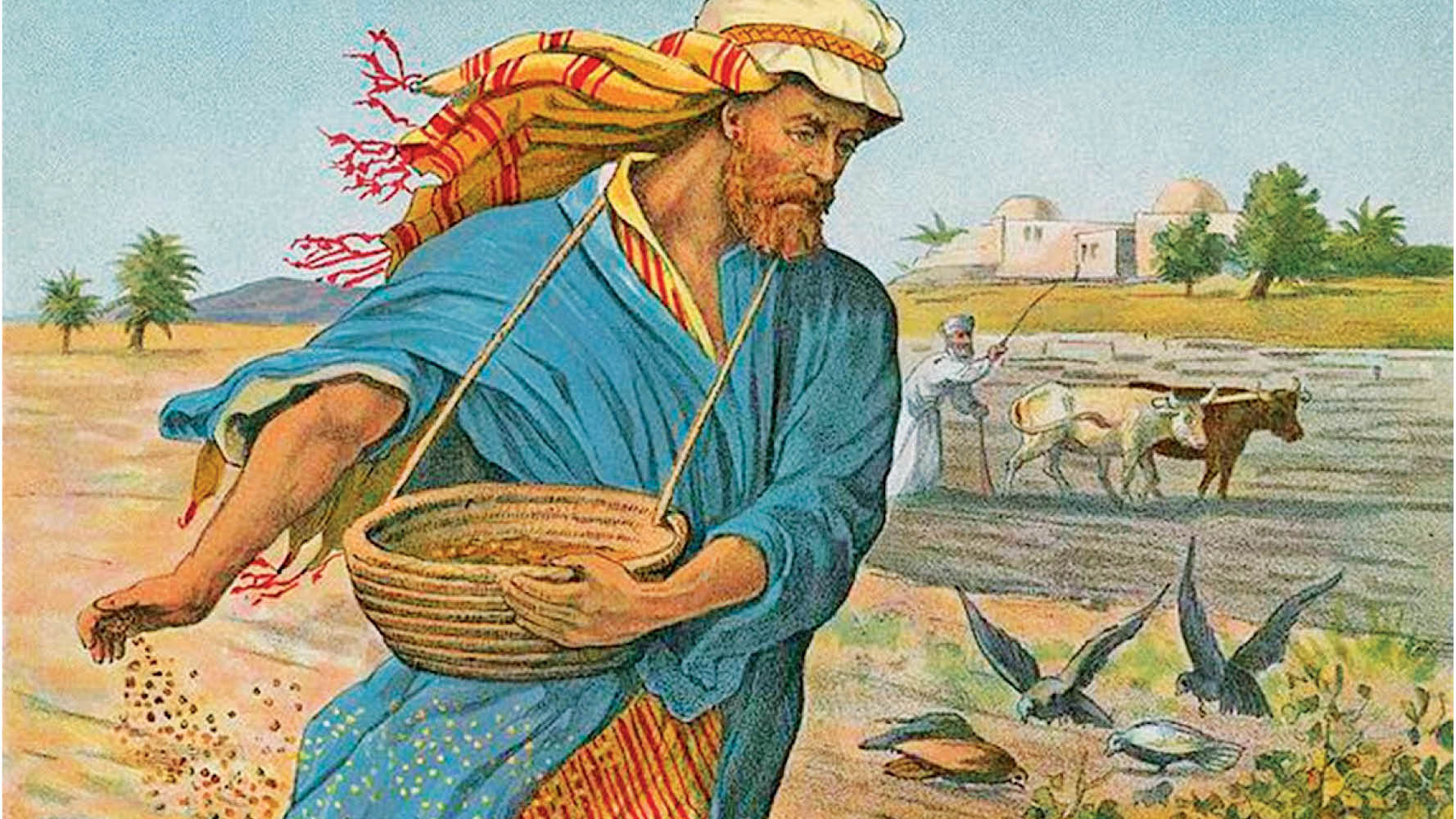
There is only one sower, and it’s never the preacher: Jesus is the sower. You are forever the field.

God the Father wants you to know this: you have the potential to be any element of the field. You can be the rocks, the soil by the road, the thorny soil where the word is choked out. Or you can be the good soil that bears fruit.

This parable isn’t about salvation: it’s about your life and your perception of yourself. The parable certainly has utility for the evangelical, but it mustn’t be discarded to the useless heap we so often manage.

Father’s heart is this: He wants you to understand that you have the potential to be anything you choose to be in this field where the sower casts His word. How you receive His Word, His Heart, is up to you.

The parable of the talents teaches us that the currency of Heaven is Faith. And each of us has been given a measure accordingly. What we do with it is up to us. We can invest our faith or hide it. But the measure or quantity we have been given is irrelevant.

When the Word arrives in your field, is it

  • Snatched away because of unbelief?
  • Choked out because of the cares of the world?
  • Withered away because of persecution against it?
  • Or multiplied because of careful application of faith?

Faith without Works is Dead

wait a minute … isn\’t pitch black?

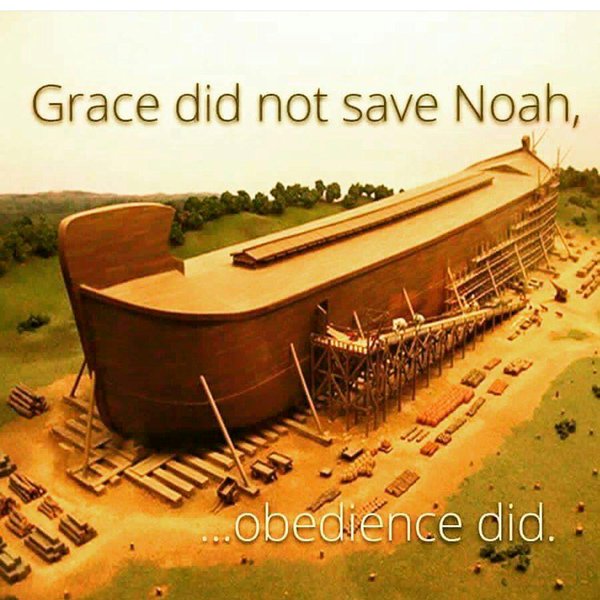
Recently, the image to the right reminded of my heritage, as a Bible Thumping Baptist.

The image didn\’t set right with me, and it took a few moments to process why.  First, it called back to the legalism I was entrench.  Secondly, it touched that old spirit of division and elitism that so easily ensnares all of us through Denominational Doctrine.

It\’s been a while since I\’ve last read Genesis and Hebrews, so I headed back there to re-read the story of Noah.

And what do you think I found?  

Noah was saved by grace, through faith – not through obedience as many would like to believe.

But Noah found grace in the eyes of the Lord (Genesis 6:8)

By faith Noah, being warned by God about things not yet seen, in reverence prepared an ark for the salvation of his household, by which he condemned the world, and became an heir of the righteousness which is according to faith (Hebrews 11:7

But … Obedience!

So then, what do we do with obedience? 

Obedience from the heart is what matters, not obedience for the sake of obedience – and that\’s where my Bible Thumping Baptist heritage took me through \”learning the Bible.\”  They were all about being obedient to God.  Granted, there are many who can consume that doctrine and respond from the heart.  But since Christian denominations are rooted in Doctrine (which divides) rather than Relationship (which unites), I find it very unlikely that Mr. or Mrs. Average Christian actually gets it.  Rather, they find themselves right in the midst of living up to a standard through regular church attendance, singing in the choir, feeding the homeless and knocking on doors:

“What are your multiplied sacrifices to Me?”  Says the Lord. “I have had enough of burnt offerings of rams and the fat of fed cattle; and I take no pleasure in the blood of bulls, lambs or goats.  “When you come to appear before Me, Who requires of you this trampling of My courts?  “Bring your worthless offerings no longer, incense is an abomination to Me.  New moon and sabbath, the calling of assemblies—I cannot endure iniquity and the solemn assembly. (Isaiah 1:11-13)

The modern church doesn\’t need a relationship with God in order to function: they just need charismatic leadership, money and enough nicely designed programs to keep people entertained in their pursuit of pleasing God and measuring up through obedience.  So it\’s not the style of music that drives people away from God, it\’s doctrine without relationship enabled through good works programs.

Paul addressed this problem at Corinth.  He learned early on to not attempt to \”wow\” people with his dexterity of doctrine, but to bring them into an encounter (an experience) with God:

And when I came to you, brethren, I did not come with superiority of speech or of wisdom, proclaiming to you the testimony of God … and my message and my preaching were not in persuasive words of wisdom, but in demonstration of the Spirit and of power, so that your faith would not rest on the wisdom of men, but on the power of God. (1 Corinthians 2:1-5)

But I will come to you soon, if the Lord wills, and I shall find out, not the words of those who are arrogant but their power. For the kingdom of God does not consist in words but in power.  (1 Corinthians 4:19-20)

Conclusion

It wasn\’t obedience that built the Ark, it was the works of faith, based in a relationship with God.

But are you willing to recognize, you foolish fellow, that faith without works is useless? (James 2:20)

Faith and Experience

Fruitful faith has a target or object upon which it is founded. It varies, but it could be reason, experience or a person, among other things. It\’s why we get our word faithful from faith: a faithful person has demonstrated two things: they have the ability to produce (you believe they can do a thing) and they will produce (you trust that they will do as they say). Faith placed in a faithful person always carries an expectation of experience. Such faith is well founded or well grounded because the person has demonstrated themselves to be reliable.

Therefore, faith is not demonstrated by how you feel, it\’s not demonstrated by the beliefs you hold, neither the doctrines you keep

Faith is demonstrated by what is produced: the outcome, the experience.  Faith \”is the assurance of things hoped for, the conviction of things not seen. For by it the men of old gained approval.\”  What happens when the thing not seen and hoped for, shows up?  Faith moves out of the way and gives place to the experience.

Therefore, believing a doctrine for the sake of belief only, is worthless. That is not faith because such belief produces no work, no experience. James summed it up by suggesting that the demons have a proper belief too, but it is to them, worthless.

“But someone may well say, \”You have faith and I have works; show me your faith without the works, and I will show you my faith by my works.\” 

You believe that God is one. You do well; the demons also believe, and shudder. 

But are you willing to recognize, you foolish fellow, that faith without works is useless?” (James 2:18-19)

Therefore, the conviction of the thing unseen must always bring fruit.  You can know if your faith was well place by observing the fruit.  As a matter of fact, you can determine the efficacy of a work or ministry by the same standard – \”you shall know them by their fruit\” (Matthew 7:20)

But the fruit of the Spirit is love, joy, peace, patience, kindness, goodness, faithfulness, gentleness, self-control; against such things there is no law. (Hebrews 11:1)

But the wisdom from above is first pure, then peaceable, gentle, reasonable, full of mercy and good fruits, unwavering, without hypocrisy. And the seed whose fruit is righteousness is sown in peace by those who make peace. (James 3:17-18)

Grace, Faith and Yielding

I\’ve said before that grace is that thing which makes us into something we cannot become on our own.  But I think people just don\’t get it.  There\’s more to it than just sitting back on our laurels and soaking it up, and that\’s where I believe people generally error.

I have been misunderstood to be making grace into something it\’s not.  And I can\’t say that I blame them, since I seemingly suggest that we think about it in non-traditional ways.  But a traditionalist I am not, so if you\’re looking for run of the mill traditional thought on this subject, then you might as well move along now, because you\’re not getting it from me.
Sovereignty
So, lets start with sovereignty.  What is it and what is the opposite of sovereignty?  Lets start with the converse, the opposite of sovereignty: what is that?  If you\’re thinking \”man\’s free will\” is the opposite of sovereignty, then you get the Gong (remember the Gong Show?) – in other words, \”no: man\’s free will is not the opposite of sovereignty.\”  Not convinced?  Well, then lets take a look at Meriam-Webster:
  1. Obsolete : supreme excellence or an example of it
  2. Supreme power especially over a body politic
    • freedom from external control : autonomy
    • controlling influence
  3. One that is sovereign; especially : an autonomous state 

The take-away from this definition is two fold: the first thing we notice is the concept of autonomy and freedom from external control.  The second thing is it\’s controlling influence.  In other words, you being sovereign, get to make your own autonomous, controlling and influential decisions free from external control and external considerations (that\’s free will, by the way).  See?  Man\’s free will is not the opposite of sovereignty, free will is sovereignty defined.  So, what is the opposite of sovereignty?

Grace
I submit to you, that grace is the opposite of sovereignty.  Whoa, hold on a minute: didn\’t God in His sovereignty fore ordain that we should be saved by grace?  How then is grace not sovereign?  Well, for starters, you\’re confusing God\’s autonomy in choosing the mechanism through which salvation is effected with the mechanism itself.  Did God choose to use grace?  Yes. Was that decision sovereign?  Yes, of course it was.  But is grace sovereignty defined?  No, it\’s not.  Consider the scripture  

 … {while} in our transgressions, {He} made us alive together with Christ (by grace you have been saved), and raised us up with Him, and seated us with Him in the heavenly places in Christ Jesus, so that in the ages to come He might show the surpassing riches of His grace in kindness toward us in Christ Jesus. For by grace you have been saved through faith; and that {salvation} not of yourselves, it is the gift of God; not as a result of works, so that no one may boast. For we are His workmanship, created in Christ Jesus for good works, which God prepared beforehand so that we would walk in them.. (Ephesians 2:5-10)

Wow, that sounds like a lot of sovereignty to me, doesn\’t it to you?  And you\’d be right – there is a lot of that  being expressed there.   But lets take take a look at something else:

He who believes in Him is not judged; he who does not believe has been judged already, because he has not believed in the name of the only begotten Son of God. This is the judgment, that the Light has come into the world, and men loved the darkness rather than the Light, for their deeds were evil. For everyone who does evil hates the Light, and does not come to the Light for fear that his deeds will be exposed. But he who practices the truth comes to the Light, so that his deeds may be manifested as having been wrought in God. (John 3:18-21)

Now the parable is this: the seed is the word of God. Those beside the road are those who have heard; then the devil comes and takes away the word from their heart, so that they will not believe and be saved. … But the seed in the good soil, these are the ones who have heard the word in an honest and good heart, and hold it fast, and bear fruit with perseverance. (Luke 8:11-15)

So, what\’s the point?  The point is faith: belief and trust is faith: \”for by grace you have been saved through faith\” and \”He who believes in Him is not judged.\”

Thus, the necessary rhetorical question is: can a person be saved who lacks faith?  Obviously, the answer is no.  Thus, salvation (which comes by grace) only happens in the presence of, or as scripture puts it \”through faith.\”  Therefore, salvation is not an act of sovereignty on Gods part, but an act of God in conjunction with the faith of the sinner.  Thus, sovereignty says \”I will do this thing outside of any consideration of you\”, whereas grace says \”I will do this thing only in conjunction with you.\”  Which is why repentance and reconciliation are required for salvation: repentance (my turning towards God) is the turning away from that which causes offence and reconciliation means to change mutually.  Both only occur through trust and belief (faith).

Now all these things are from God, who reconciled us to Himself through Christ and gave us the ministry of reconciliation, namely, that God was in Christ reconciling the world to Himself, not counting their trespasses against them, and He has committed to us the word of reconciliation.  (2 Corinthians 5:18)

.. solemnly testifying to both Jews and Greeks of repentance toward God and faith in our Lord Jesus Christ. (Acts 20:21)

In the two verses above, we see our requirements of entering into that ministry of reconciliation through faith.

I understand that for some, this is a hard thing to grasp.  But we must separate what God does from how He chooses to do it:

So then, does He who provides you with the Spirit and works miracles among you, do it by the works of the Law, or by hearing with faith?  (Galatians 3:5)

And the rhetorical answer is \”by hearing with faith.\”  And so it is with spiritual gifts: while they are freely given (charisma – grace gift), they are not exercised without our cooperation.  Which means we are not puppets of God.  We can choose to exercise our gifts and follow God, or we can choose to run away like Jonah.

Cooperation

In one sense, the only valid work we can do with God is cooperation.  In many cases our cooperation is just as simple as faith.  In other cases, it\’s yielding ourselves to Him.  In other instances, it\’s resisting the devil and drawing near to God.  All of these actions are examples of our cooperating with God.  Finding someone willing to cooperate with God is of paramount importance to Him:

I searched for a man among them who would build up the wall and stand in the gap before Me for the land, so that I would not destroy it; but I found no one.  (Ezekiel 22:30)

The passage above is a clear example of the results of sovereignty and grace.  One one hand, God was ready to destroy the land  (sovereignty), but on the other hand, He wanted to show mercy and save the land.  But what was lacking: \”a man among them who would … stand in the gap.\”  What was He looking for?   Fortitude, intercession, faith and cooperation: a space to express grace.

Consider also the seven years of plenty followed by the seven years of famine:

It is as I have spoken to Pharaoh: God has shown to Pharaoh what He is about to do.  Behold, seven years of great abundance are coming in all the land of Egypt; and after them seven years of famine will come, and all the abundance will be forgotten in the land of Egypt, and the famine will ravage the land. So the abundance will be unknown in the land because of that subsequent famine; for it will be very severe. Now as for the repeating of the dream to Pharaoh twice, it means that the matter is determined by God, and God will quickly bring it about.  Now let Pharaoh look for a man discerning and wise, and set him over the land of Egypt. Let Pharaoh take action to appoint overseers in charge of the land, and let him exact a fifth of the produce of the land of Egypt in the seven years of abundance.  (Genesis 41:28-34)

God was acting in sovereignty, with providence and in grace in this example.  Through sovereignty and providence He provided the dream, the plenty and the famine.  Through grace he provided the interpretation, the produce and the ability to harvest the land.

Living by the Spirit

Which brings me to yielding.  I\’ve often wondered how to reconcile being filled with the spirit (Ephesians 5:18), and walking in the spirit (Galatians 5:16) and dying to self (Matthew 16:24), and last but not least, being transformed by God (Philippians 1:6).  At times, they seem incompatible, and most certainly if you spend any time in the average church, you will get seemingly conflicting and incompatible ideas regarding all of them.  So I spent a lot of time considering spirit – what is it?  Well, God is spirit.  Jesus has given us the comforter, His Holy Spirit.  Jesus described spirit as wind.  I even determined that the effects of His Holy Spirit demonstrate the affections of God (that\’s a play on words, but it works out correctly).  I\’ve understood that the spirit behind the 10 Commandments is one of protection, concern and love – not of \”I\’m a Holy God and I get to make the rules, so do or die.\”

Unfortunately, I\’ve not come to any grand conclusions.  I\’ve had to be taken back a step, back to yielding.  It turns out that in the moment by moment decisions that we are presented with, yielding to one thing or the other is what it all boils down to: do I perform this thing, or that thing?  Do this or that?

In the end, we\’ve got to make a choice.  We will yield to the flesh, or we will yield to His Holy Spirit.  Is it that simple?  Apparently so, for God did say, \”Submit therefore to God. Resist the devil and he will flee from you. Draw near to God and He will draw near to you.\” (James 4:7-8)  In order to submit, resist and draw, you must yield to His Holy Spirit and die to self: you must cooperate with God and in doing so, you receive grace to overcome.

Sometimes, yielding is not an easy choice.  But it is fundamental to living in the Spirit, dying to self, being filled with the Spirit and being transformed by God.  And it puts us in a position of living in Grace, as opposed to being fallen from grace.  For when we are fallen from grace, we are living in our own strength, making our own way and working to build ourselves up with our own hands.

Yielding to His Holy Spirit and living in grace is a much better option, don\’t you think?